The Best of Speed Champions: A 10-Year (Okay, 11-Year) Retrospective

Today’s guest article comes from Caleb Wagoner, a car and sports car racing enthusiast and AFOL from Virginia. You can find him online on Instagram.
What Makes a Great Speed Champions Set?
It’s been just over a decade since the Speed Champions theme was introduced… and it changed the LEGO car world forever. Today, we’re looking back at some of the best Speed Champions sets from the past ten years and which ones stand out as the very best.

So what actually makes a great Speed Champions set? To me, a good Speed Champions set is a careful balance between three things: good part selection, creative building techniques, and how well it captures the source material. Of course, if one of those really stands out, it can make up for shortcomings in the others. So with that established, let’s dive in!
McLaren Senna: Pushing the Limits
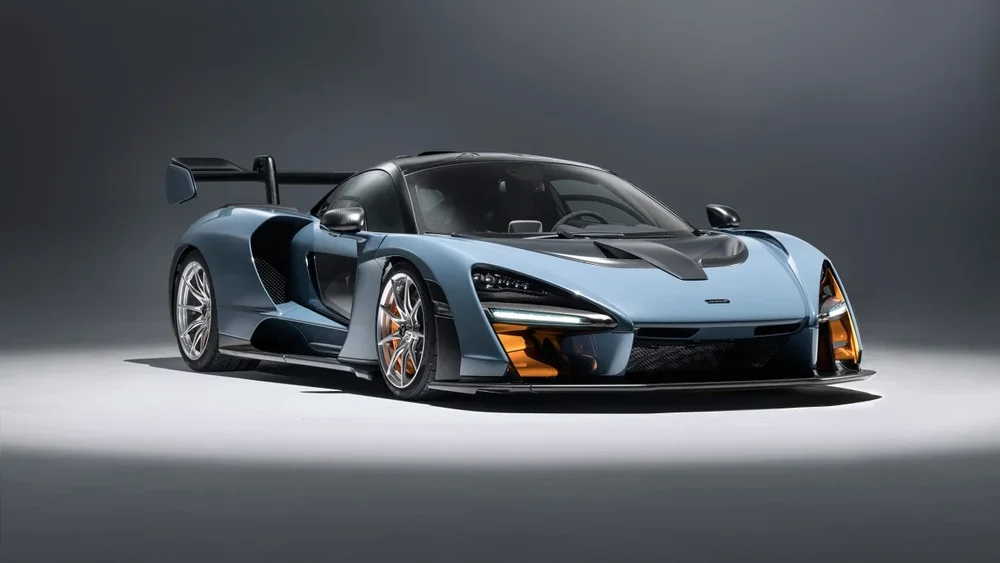
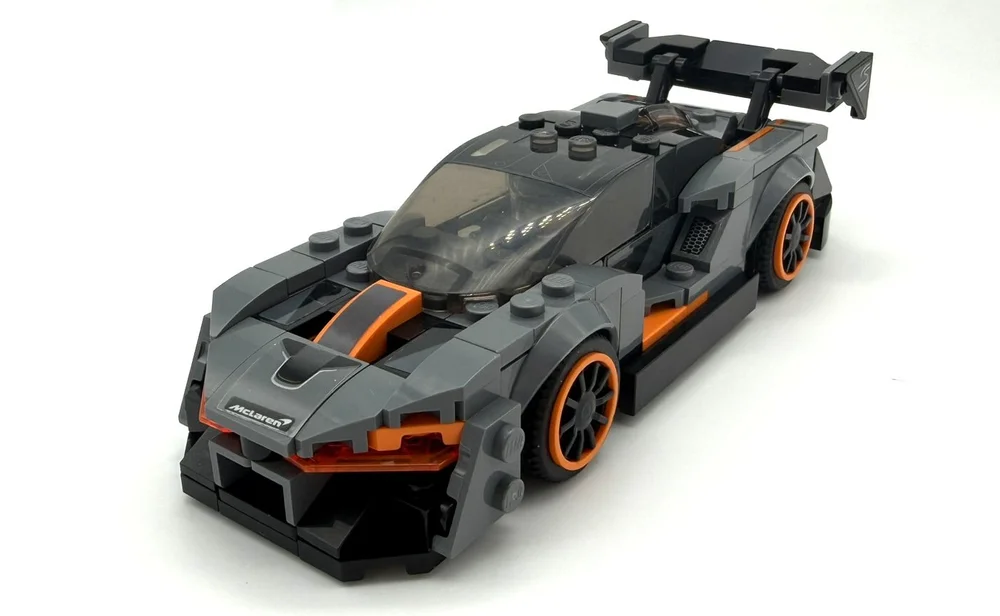
The first set that checks all of those boxes for me is 75892 McLaren Senna.

The main thing that impresses me about this set is the floating windscreen used to capture the glass in the doors. I’m sure there are other examples of parts not being connected to anything, but this is the only one I remember.
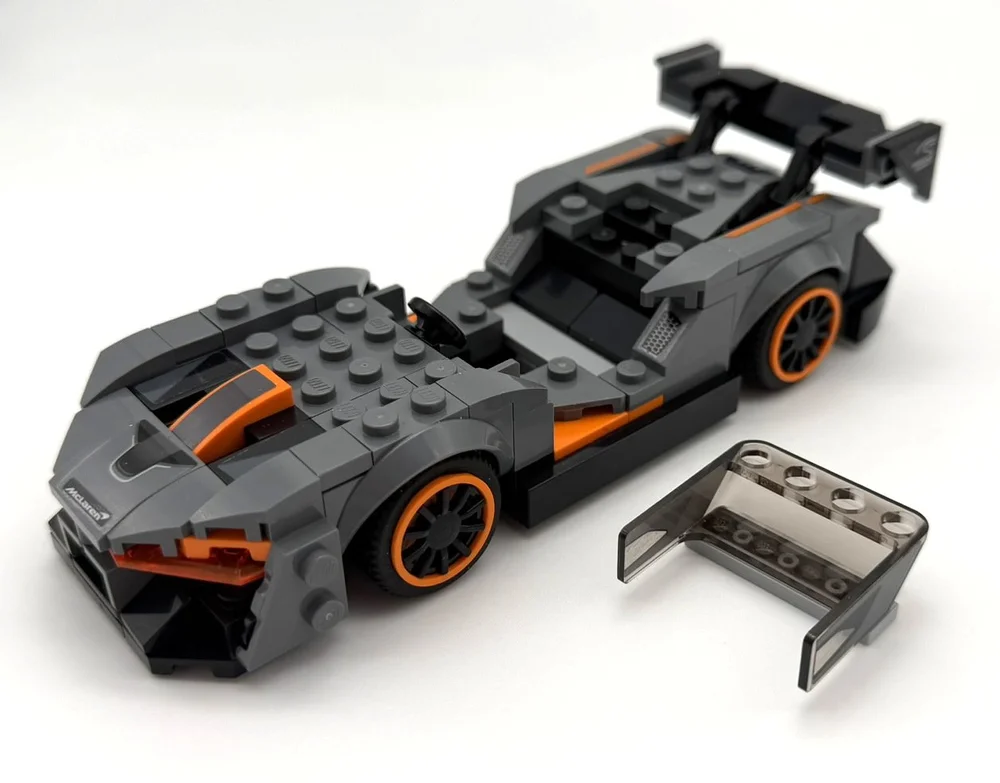
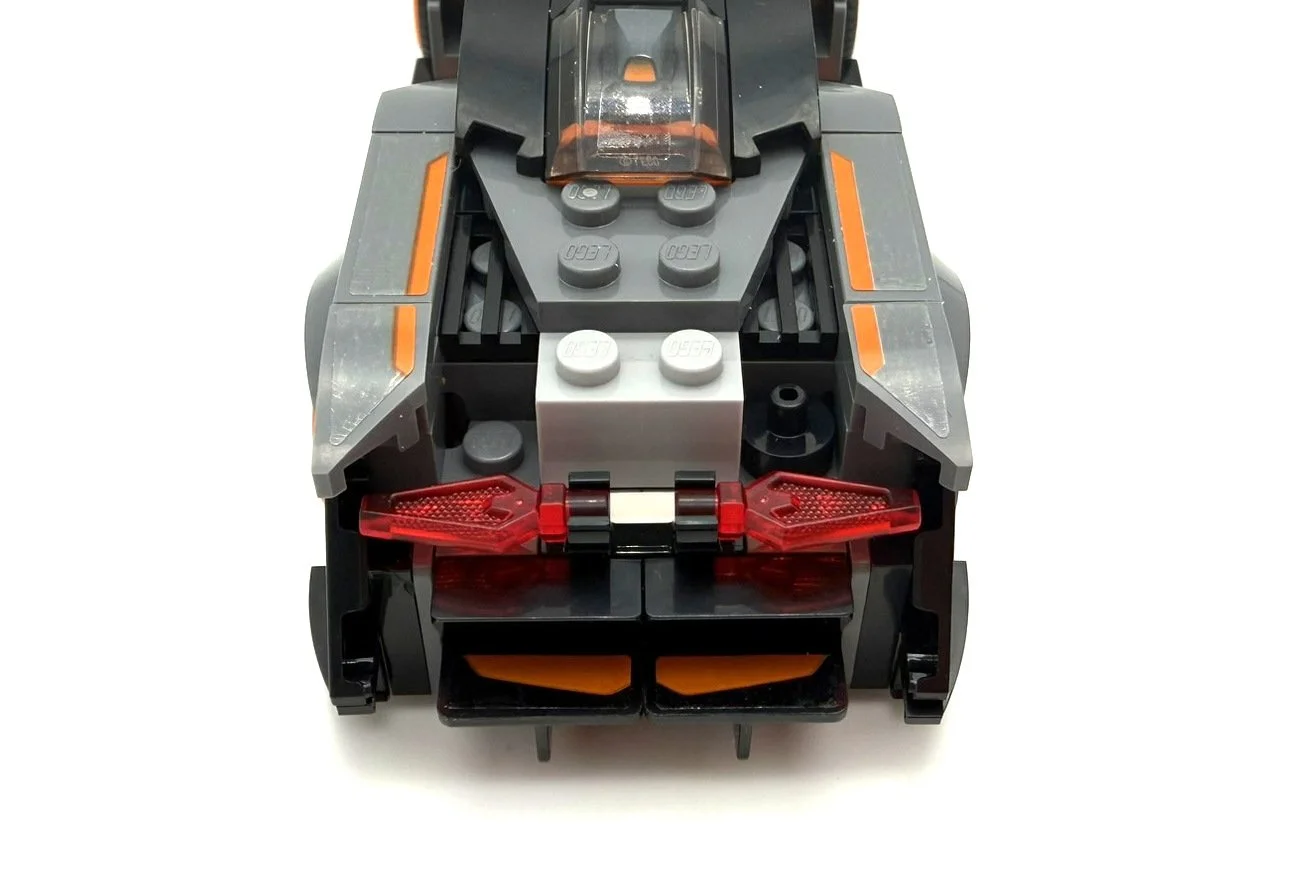
Then there’s the use of Nexo Knights axes as headlights and transparent red spear tips as taillights—exactly the kind of clever part usage this theme thrives on.
View fullsize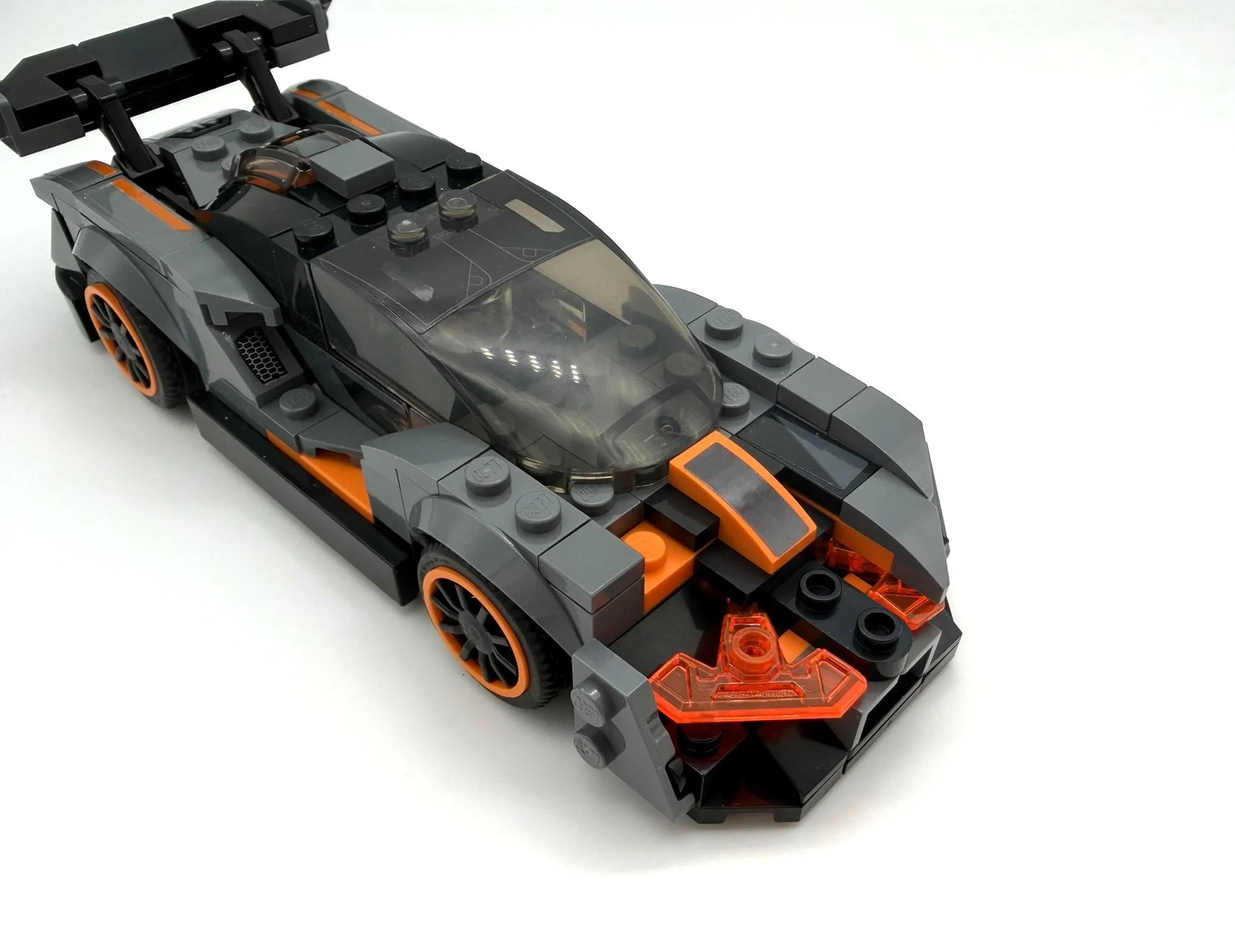
View fullsize
At the time this set was released, it was also one of the best ways to get the new cut baby bows in dark grey in quantity.
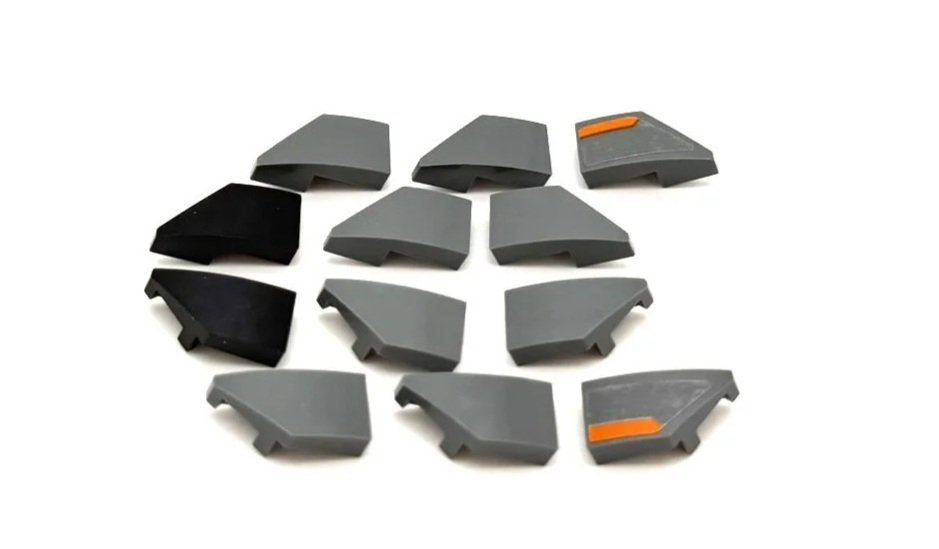
The Senna is a very angular car, so the angular nature of LEGO bricks captures the car very well in my opinion. If the Senna represents refinement within the system, the next set takes a very different approach.
Aston Martin: Breaking the Rules
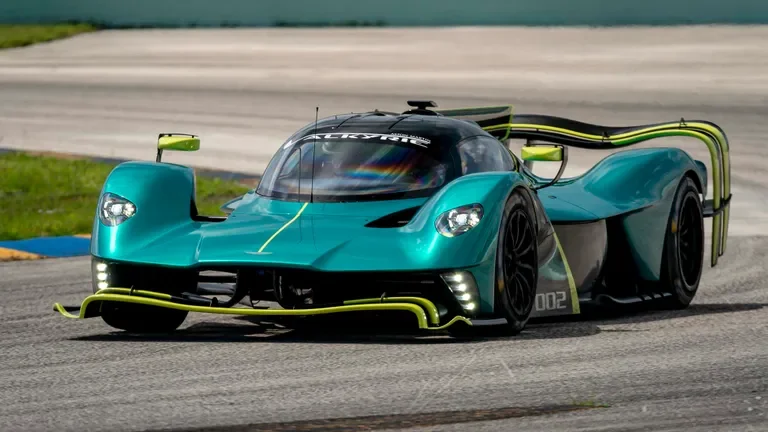
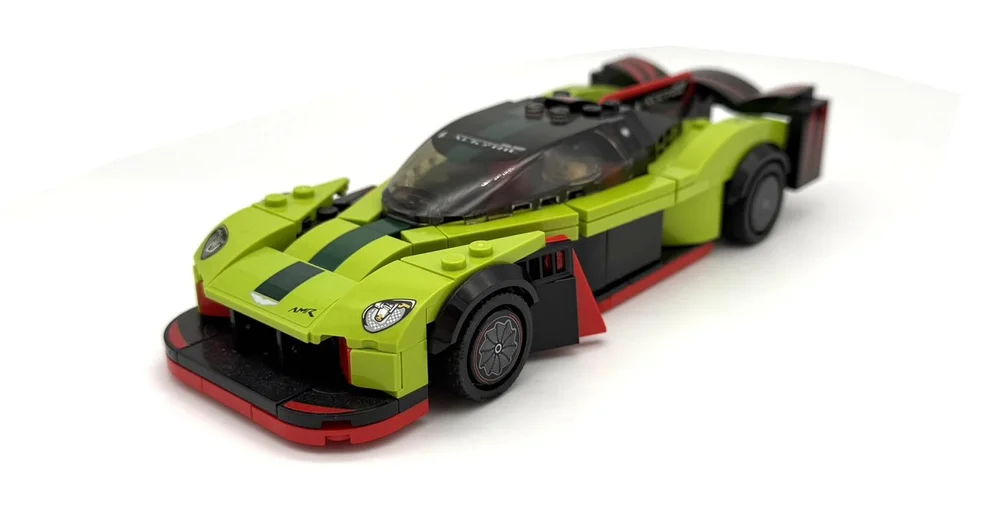
Next up is 76910 Aston Martin Valkyrie AMR Pro & Aston Martin Vantage GT3. This set came out in 2022, so Speed Champions sets have since switched to 8-wide which allows for better proportions, more detail, and better capturing cars as a whole.
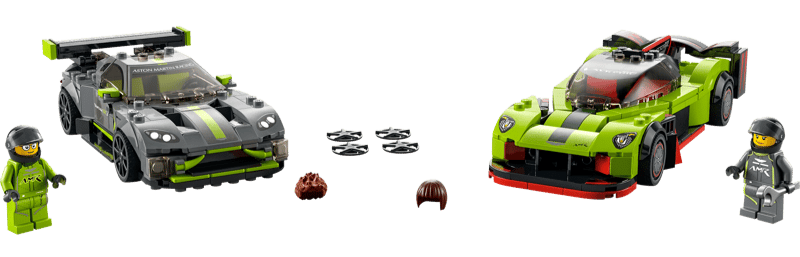
The Valkyrie is the car we’re really interested in here. By this point, LEGO had introduced the new Speed Champions base piece—but because of the Valkyrie’s unique shape, it isn’t used. Instead, LEGO repurposes a part typically used for axles to form the body where the minifigure sits. Around that cockpit, there’s some impressively complex bracket work to build out the surrounding structure.
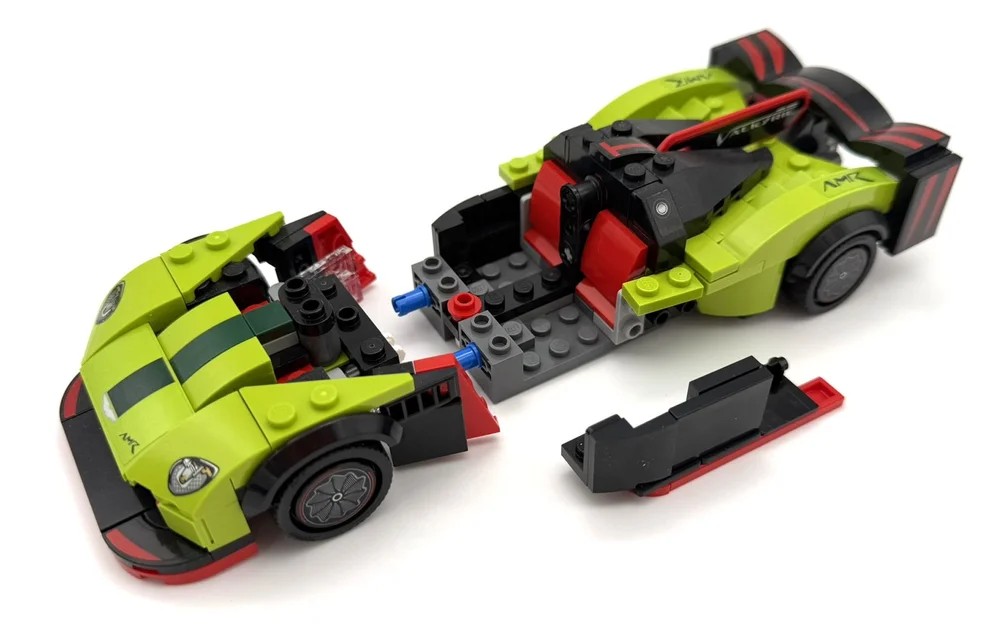
The Valkyrie is the complete opposite of the Senna in that it’s a very curvaceous car. But I think the LEGO designers did a decent job recreating this very radical car with LEGO, especially since it has so much negative space. Unfortunately, I don’t think the parts selection in this set is all that interesting, however, its radical departure from a traditional Speed Champions build makes it worth including here.
Lamborghini Duo: Complexity Meets Color
77238 Lamborghini Revuelto & Huracán STO is a much more recent entry and is still available from LEGO. Unlike the Aston Martin two-pack, both cars here are particularly impressive.
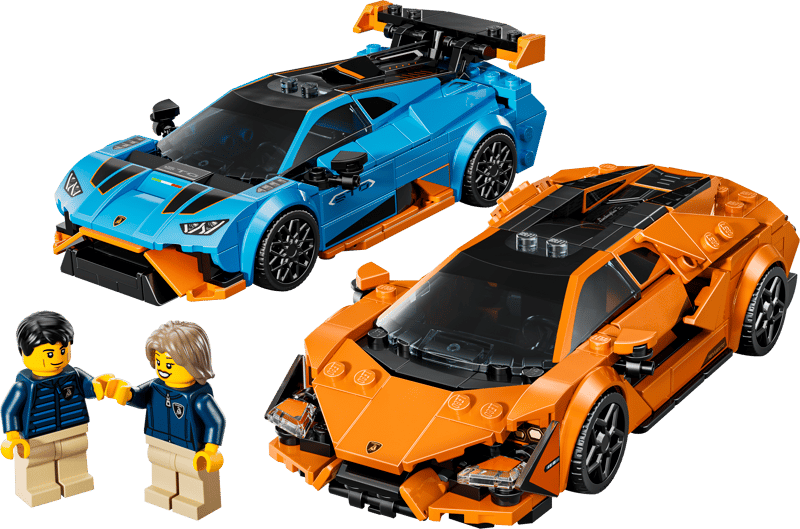
Starting with the Huracán STO, the whole rear diffuser area with the orange fence is particularly clever. Parts connect both to the fence and through it, creating a layered effect that feels far more complex than the scale suggests.
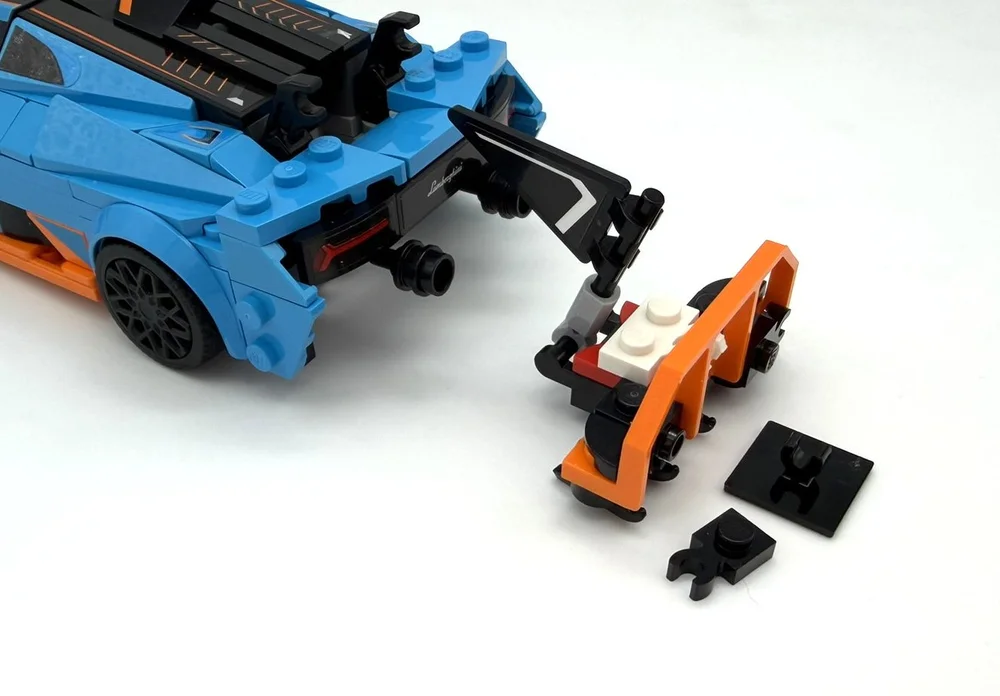
The Huracán also has a small engine build inside, which seems to be becoming more common and is always a welcome addition to a Speed Champions car.
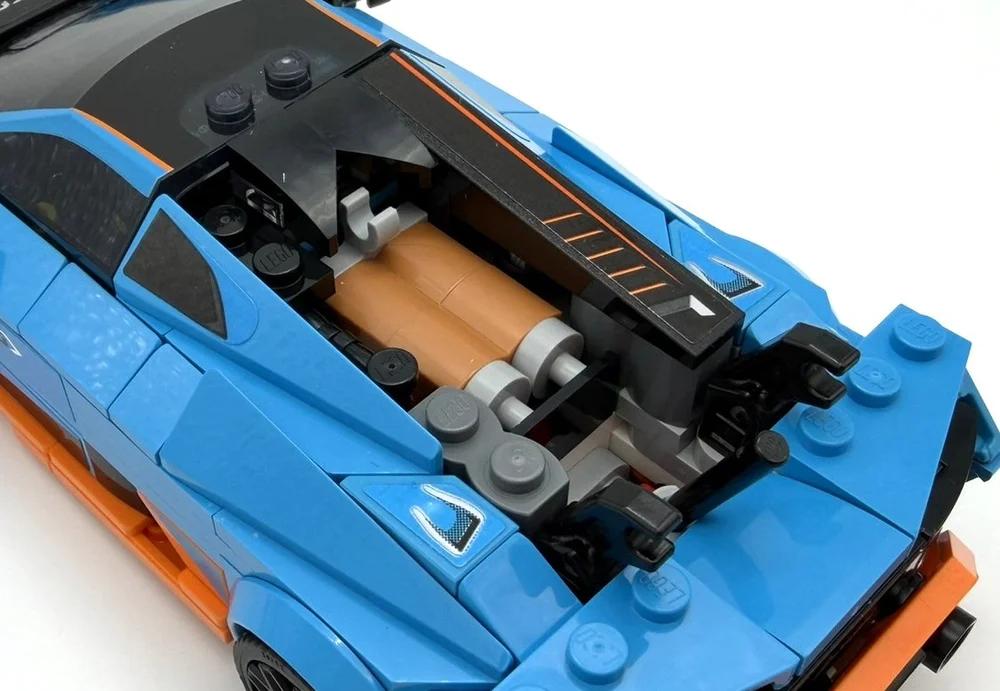
There’s a fair bit more going on in the Revuelto. The side of the build where the triangle tile connects is quite intriguing. It’s attached to one of the hose-gun pieces and then wedged in place by some parts placed later.
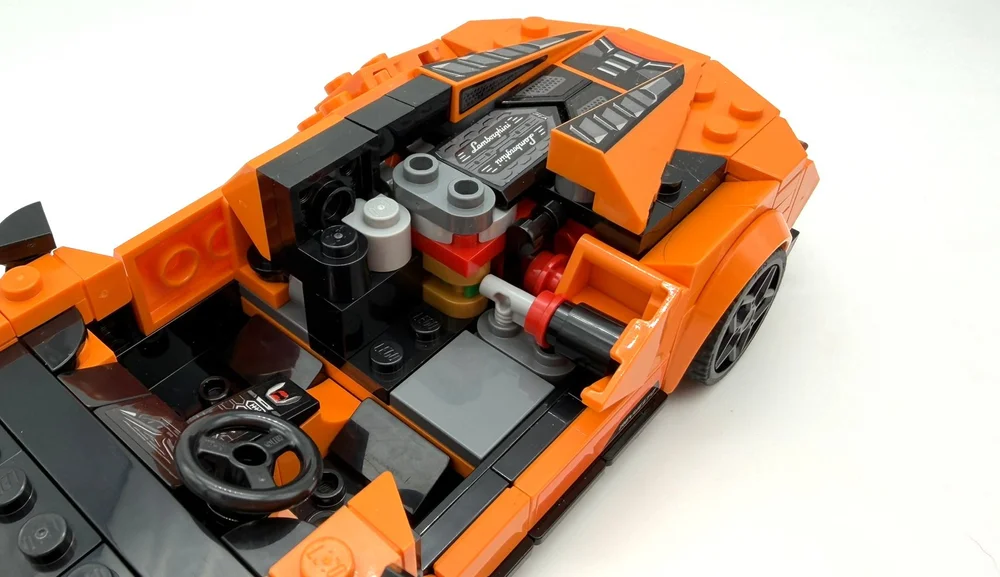
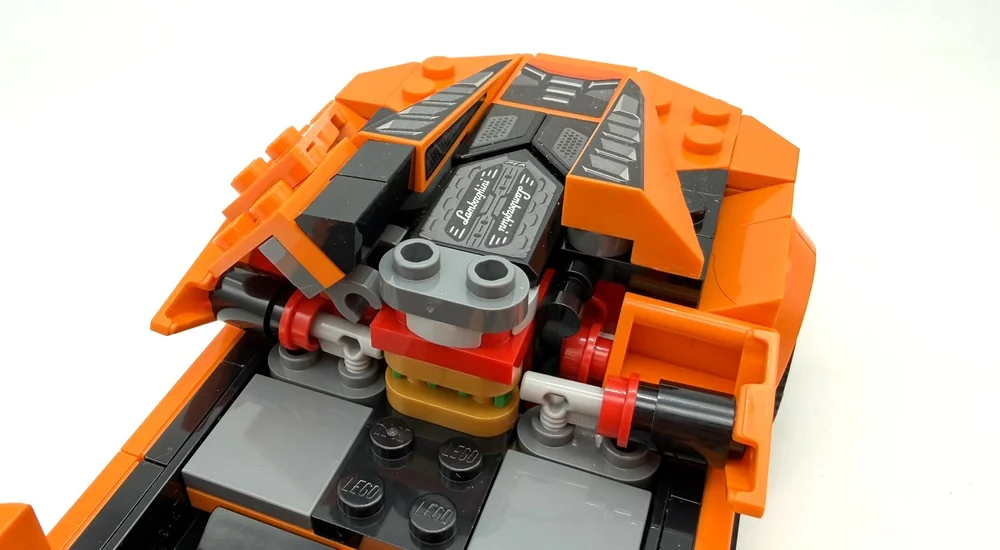
As you build up from the side intakes, there’s some more crazy connections using one of the 1x2x1 rounded bricks with bars to hold the brackets at the right angle to capture the angular sides of the Revuelto.
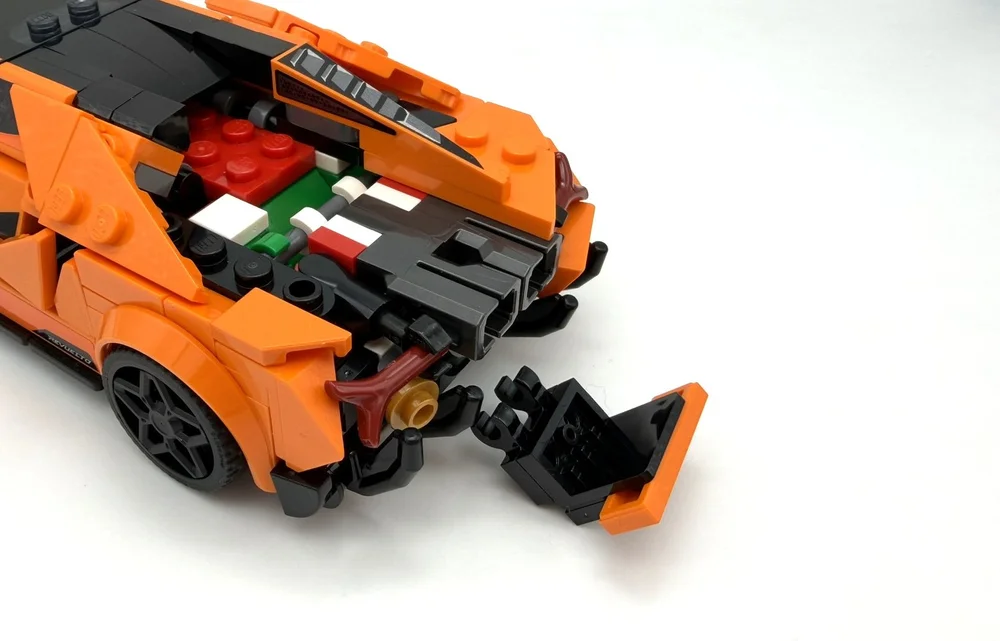
Then of course there’s the back, between using the stud shooters for exhaust, the carrot stems for taillights and all the angles required to get everything to fit in this small area. Honestly, it’s impressive this level of complexity made it into an official set.
Finally we move to the front end of the Revuelto. The headlights are a sub-assembly that clips into place and hides the ends of the wonderfully used cleavers that form part of the front bumper.
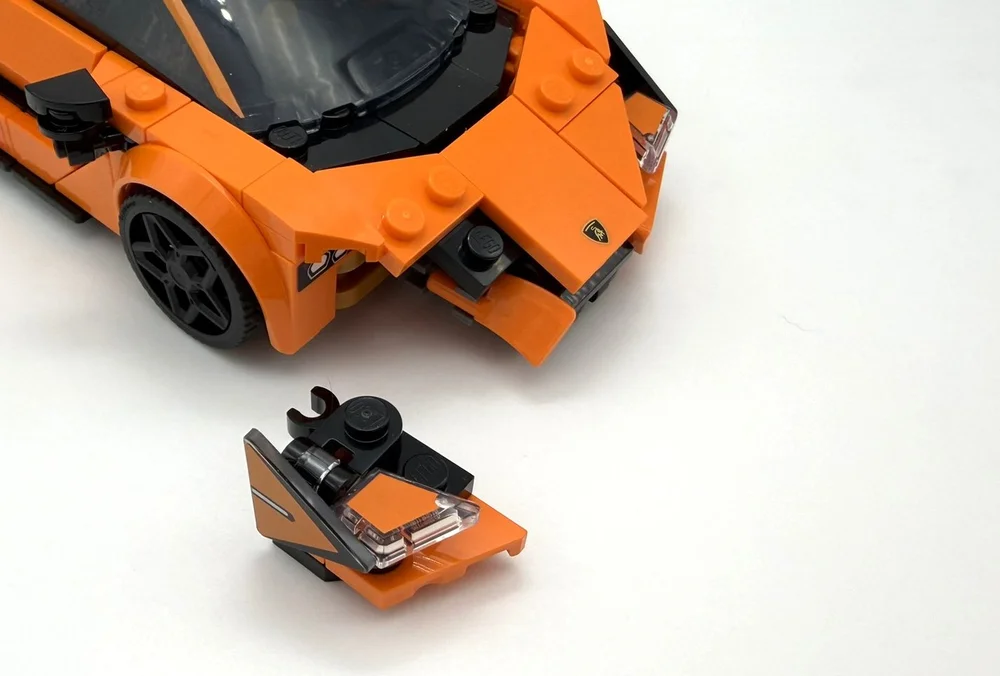
Both Lamborghinis are rather angular cars and I think both are captured well in their LEGO forms. Like the Senna, the Revuelto also has negative space headlights, though I don’t think either car fully nails the headlights.
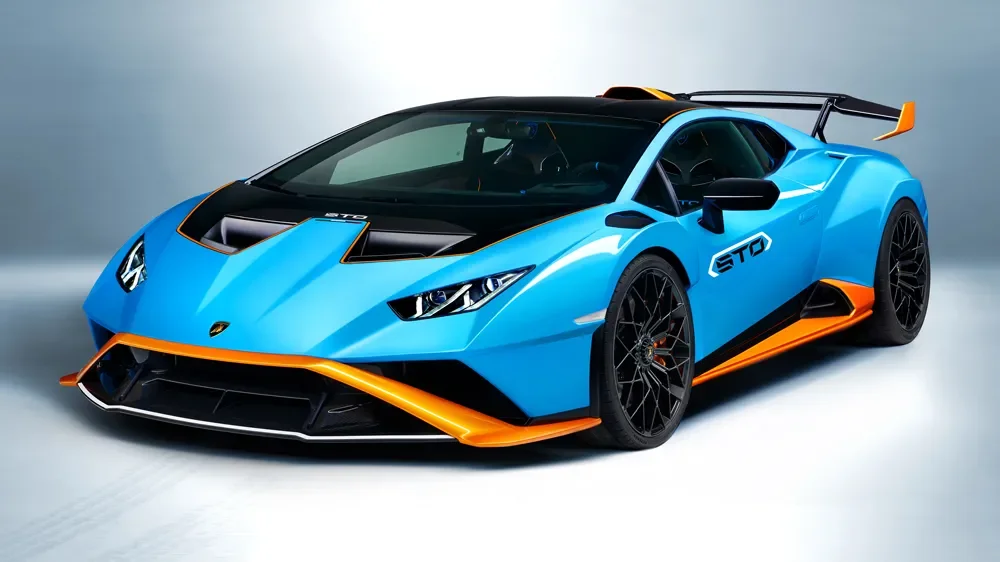
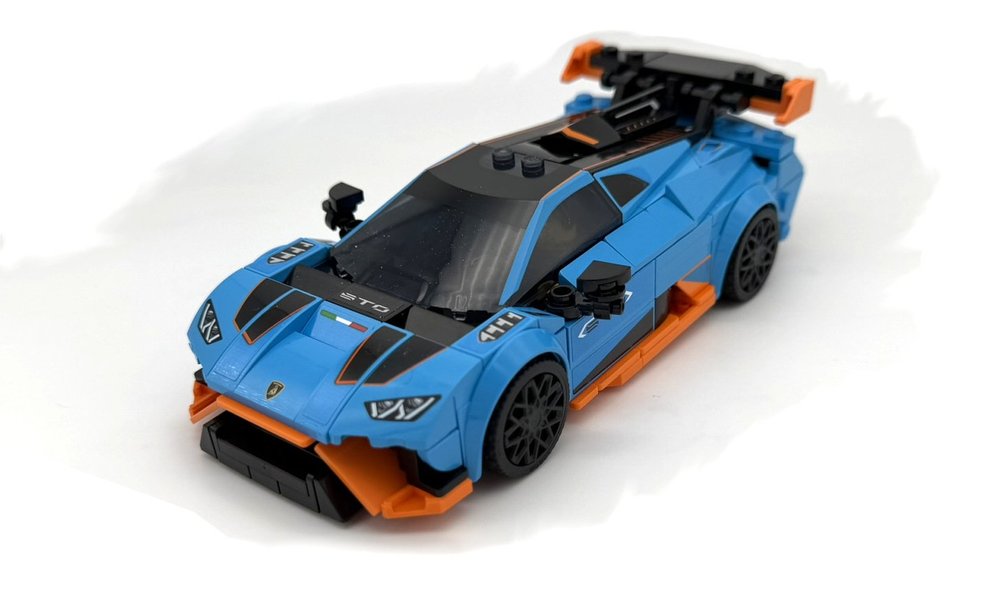
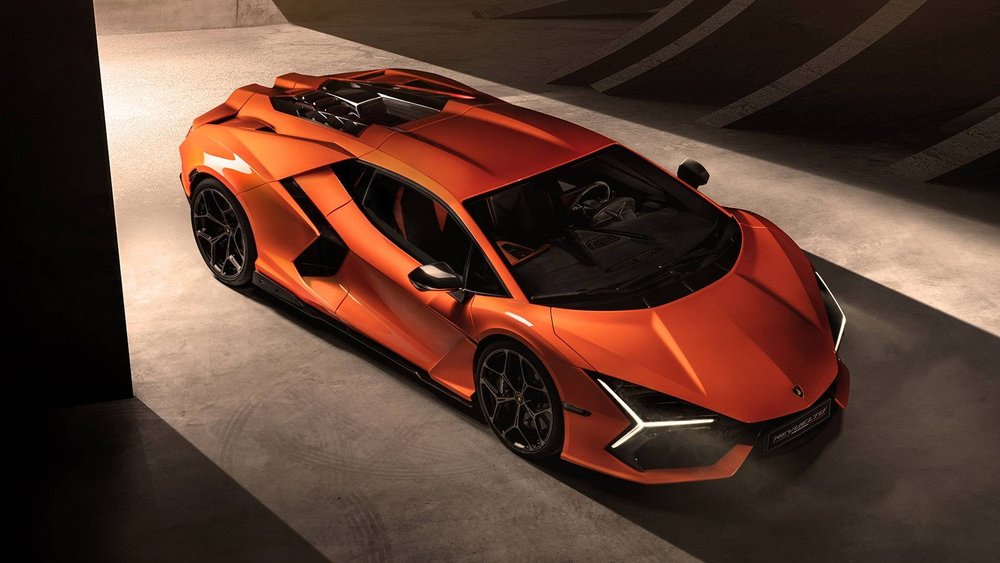
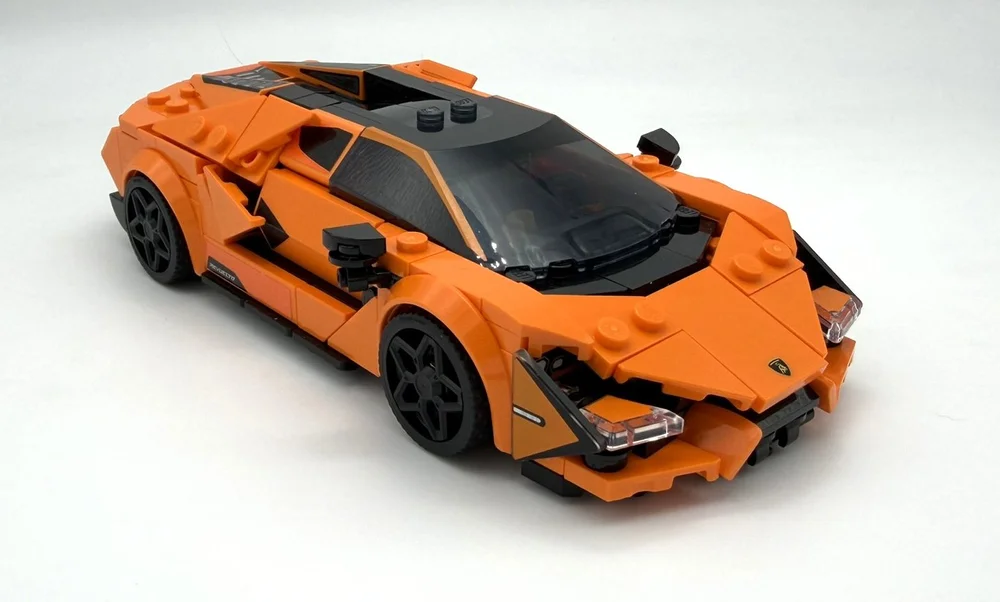
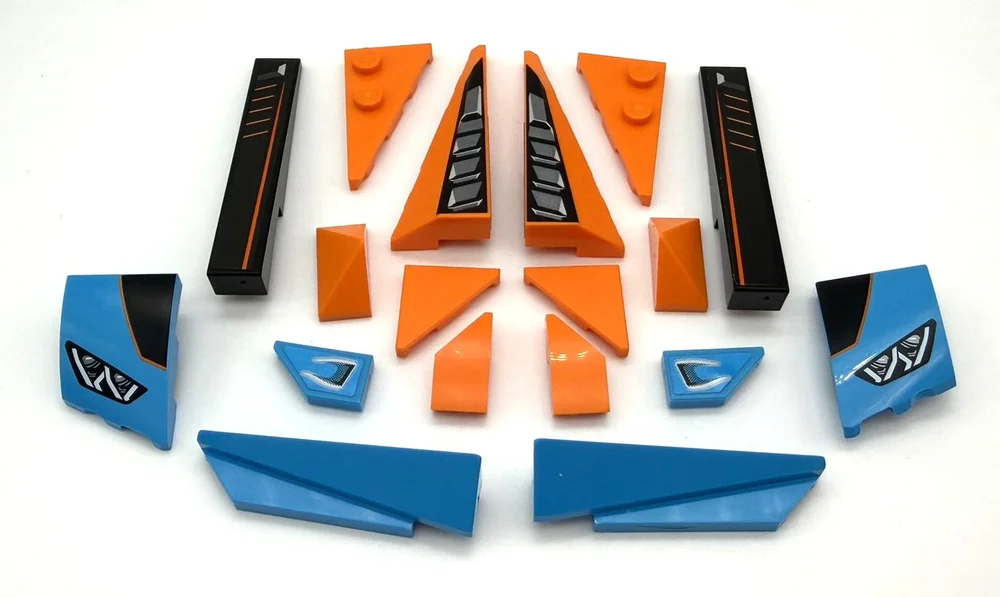
I love a good bright colored sportscar. Both of the Lamborghinis in this set fit that bill, and provide us with an excellent selection of slopes, wedges, and tiles in both dark azure and orange that will be useful in many other places.
Lightning McQueen: No Minifigure, No Limits
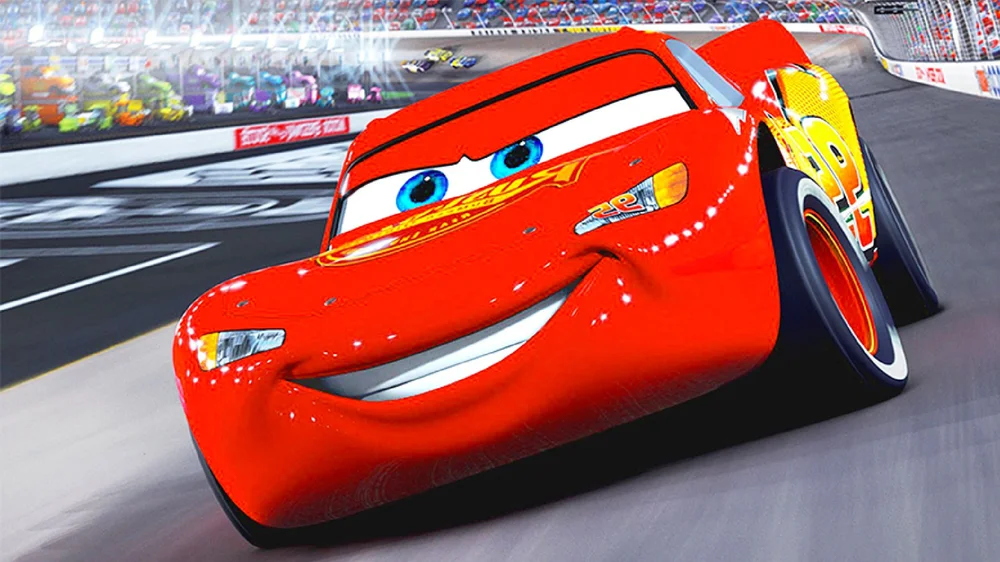
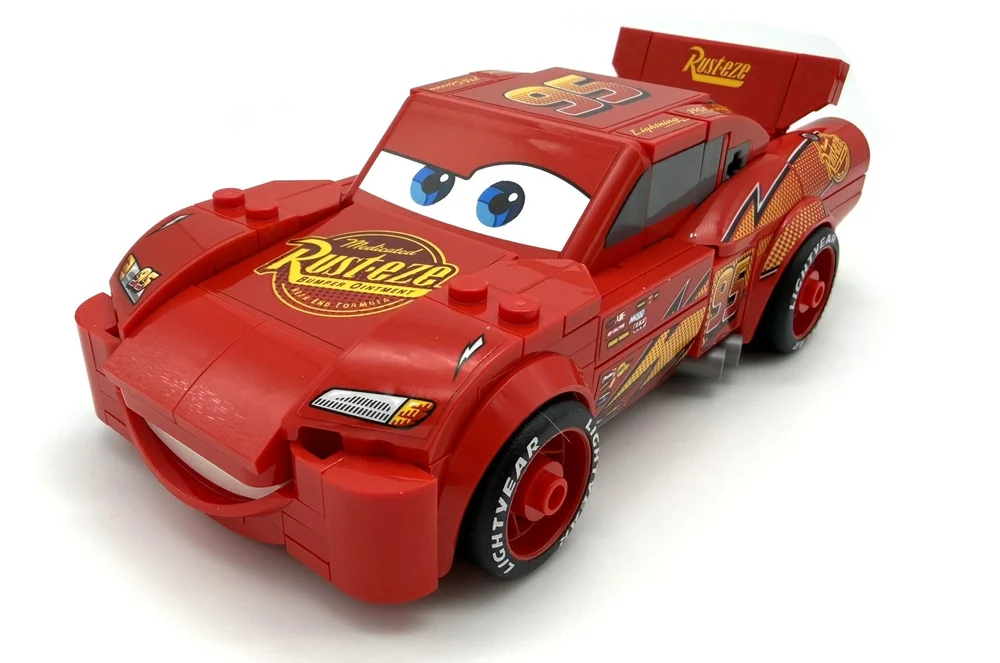
Finally we move onto 77255 Lightning McQueen who was the catalyst for this article. I think Lightning McQueen might take the crown as the best Speed Champions set yet.
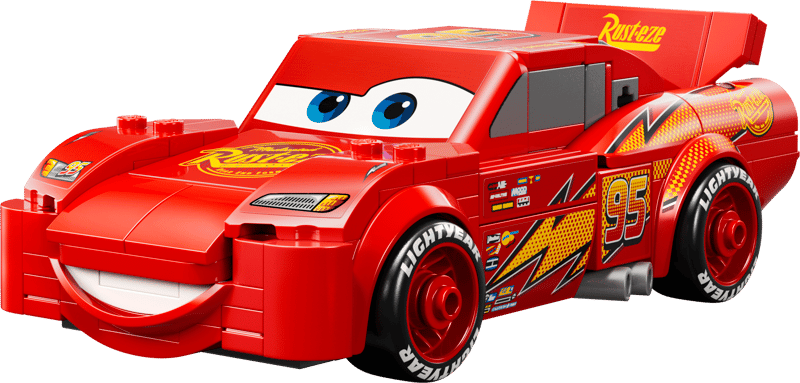
Not needing to accommodate a minifigure gives this set a LOT more freedom in its design. You start out by creating a base with studs in almost every direction and then build out from there. You slowly build up sub-assemblies and attach them to the main body. Lots of clips are used to hold things on. On the sides there’s a plate offset so that the lines on the rear fender line up better.
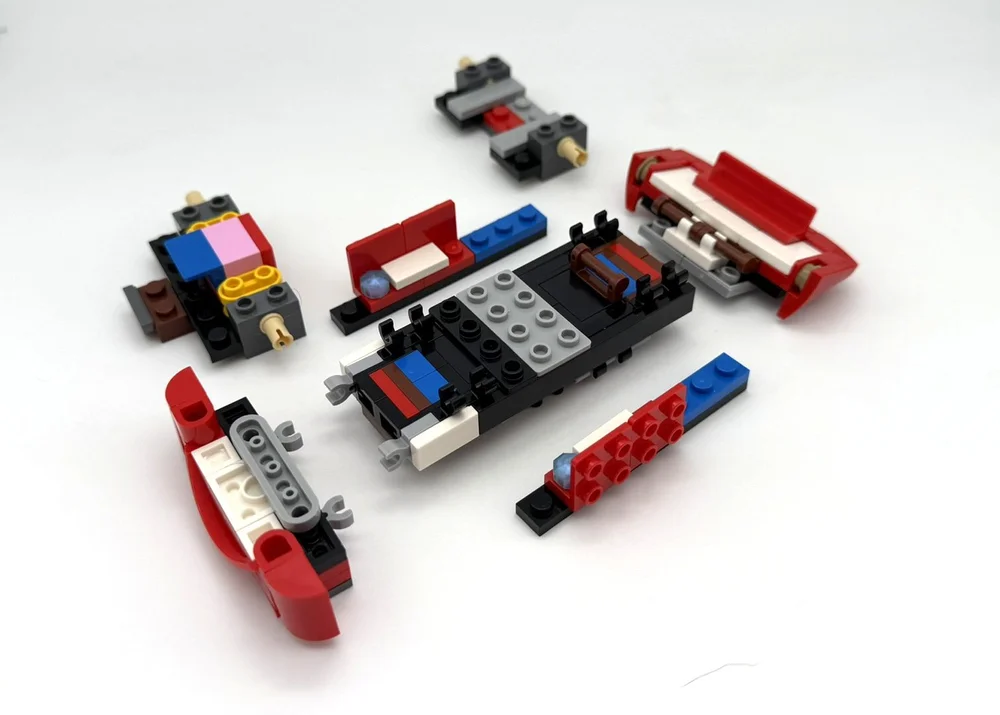
At first glance you’d think that the windscreen is built studs up, but even that is built using SNOT techniques.
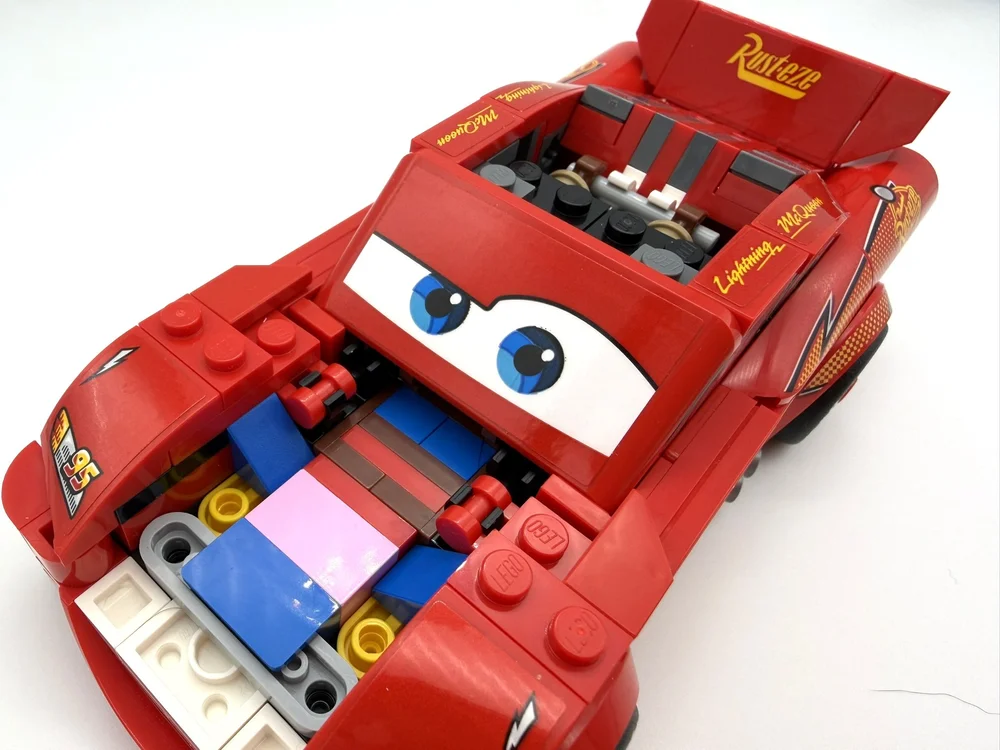
LEGO even left room for a “brain”, a driveshaft, and exhaust on him.
View fullsize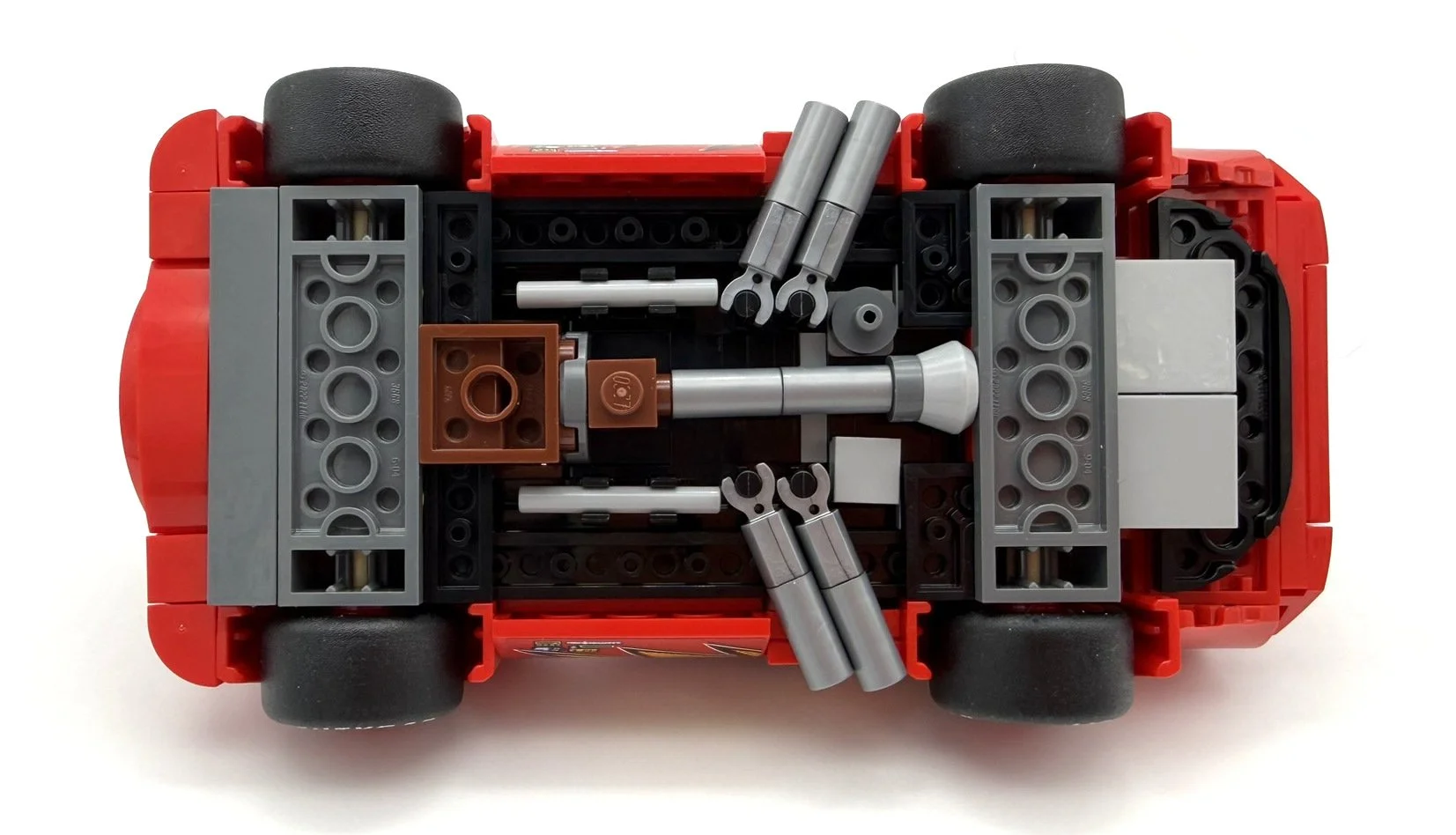
View fullsize
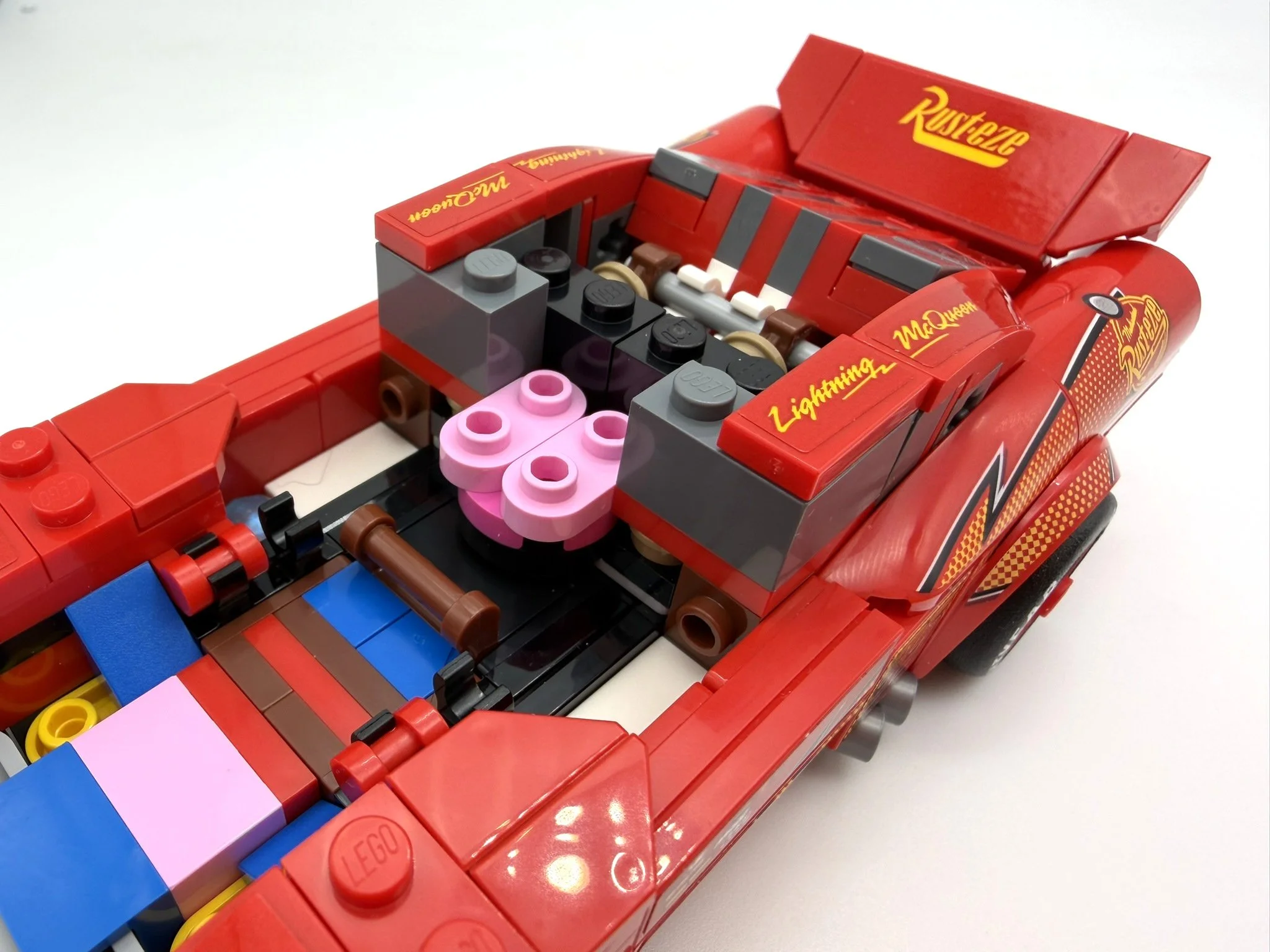
In all, while he looks like a simple build, there are a lot of subtle offsets and connections to capture Lightning very well.
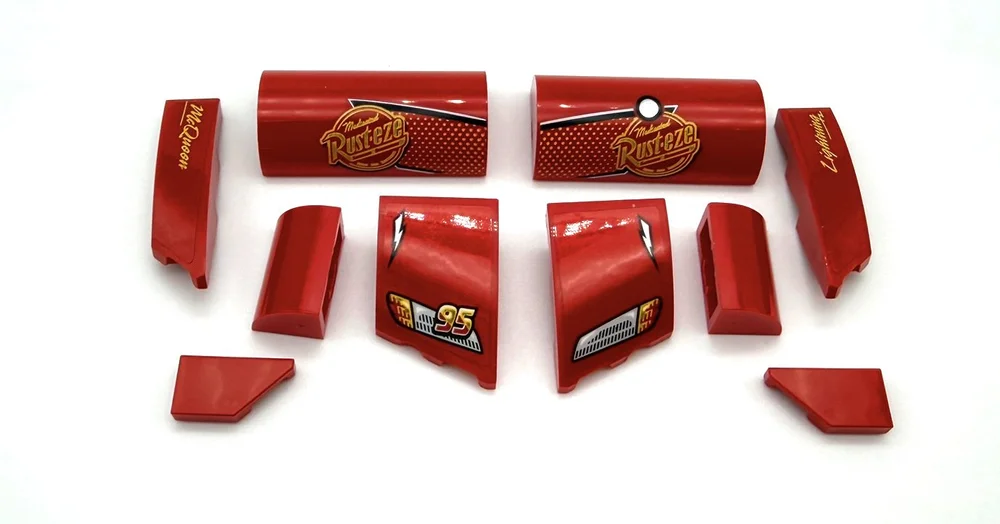
Of course to be the best Speed Champions set ever, it also needs to have a good selection of parts. Looking at the finished set, you wouldn’t think there’d be such a nice selection of parts but there is! Lots of red slopes and wedges in various sizes and shapes, a huge array of clips, and of course a wide selection of snot bricks.
Honda: A Splash of Pink
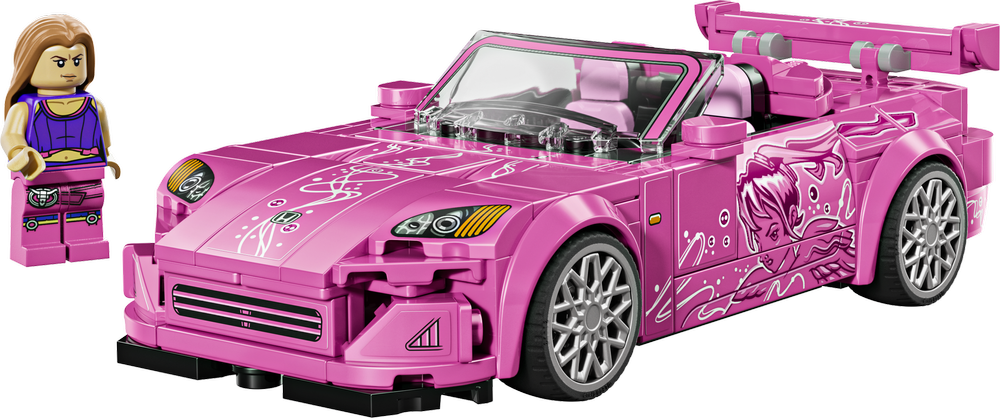
An honorable mention goes to 77241 2 Fast 2 Furious Honda S2000, which delivers a great selection of pink recolors and is one of the first Speed Champions sets I remember featuring a proper engine build inside.

Image via New Elementary
It’s remarkable to see how far Speed Champions—and LEGO’s standard for minifigure-scale cars—has come in the last decade. From the basic 6-wide that started it all, to today’s incredibly intricate 8-wide models, Speed Champions has improved immensely in 10 years.
I hope this look back shows why these sets stand out among the best Speed Champions has to offer. It’s a theme full of innovation, clever parts usage, and constant evolution—and if the past decade is any indication, it’s only going to keep getting better.
Which Speed Champions set do you think best captures its real-world counterpart and which one surprised you the most during the build? Let us know in the comments below!
Do you want to help BrickNerd continue publishing articles like this one? Become a top patron like Paige Mueller, Rob Klingberg from Brickstuff, John & Joshua Hanlon from Beyond the Brick, Megan Lum, Andy Price, Lukas Kurth from StoneWars, Wayne Tyler, Dan Church, and Roxanne Baxter to show your support, get early access, exclusive swag and more.