The LEGO Ideas program, which lets fan ideas become official sets, features a pretty even split between licensed brands like Gremlins and Twilight and non-IP subjects, often drawing on nature. Today, we’re taking a look at one of those nature sets – LEGO Ideas 21366 Floating Sea Otters. The set underwent pretty major changes since the fan concept earned its 10k votes, even picking up a bonus baby otter in the process! How does the final model stack up? Today we’re joined by guest reviewer Sakiya Watanabe (n.a.b.e_mocs) for a deep dive on the set. Sakiya’s lifelike creature mocs made him one of our favorite builders of last year, so it’s quite a treat that the builder also created his own Sea Otter moc to accompany the official set, which you can see at the end of the review. Now let’s crack open some clams and get to the review!
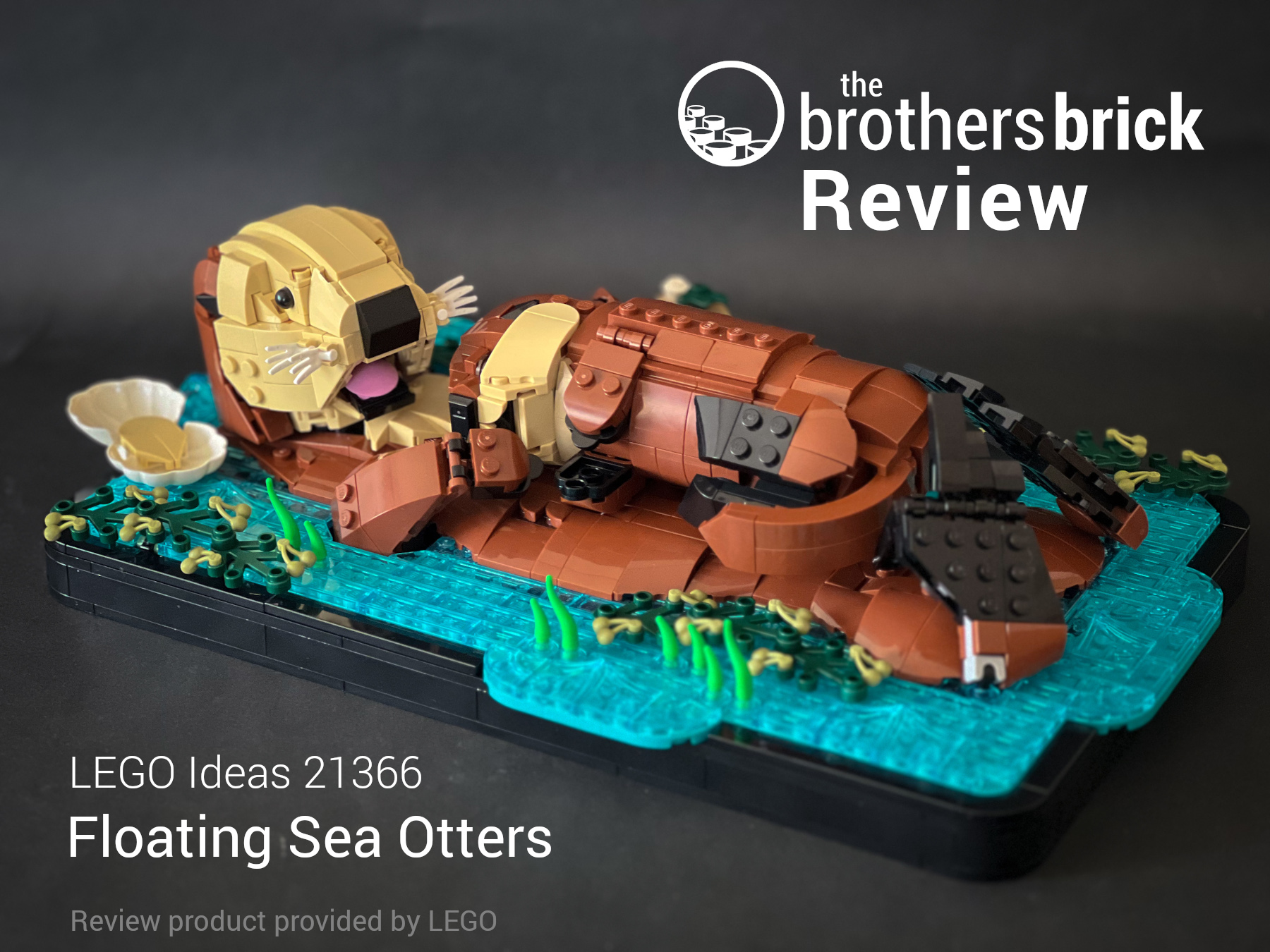
The LEGO Group provided The Brothers Brick with an early copy of this set for review. Providing TBB with products for review guarantees neither coverage nor positive reviews.
LEGO Ideas 21366 | 1234 Pieces | Available March 1, 2026; Pre-orders open now |US $119.99 | CAN $149.99 | UK £99.99
From Fan Design to Official Set
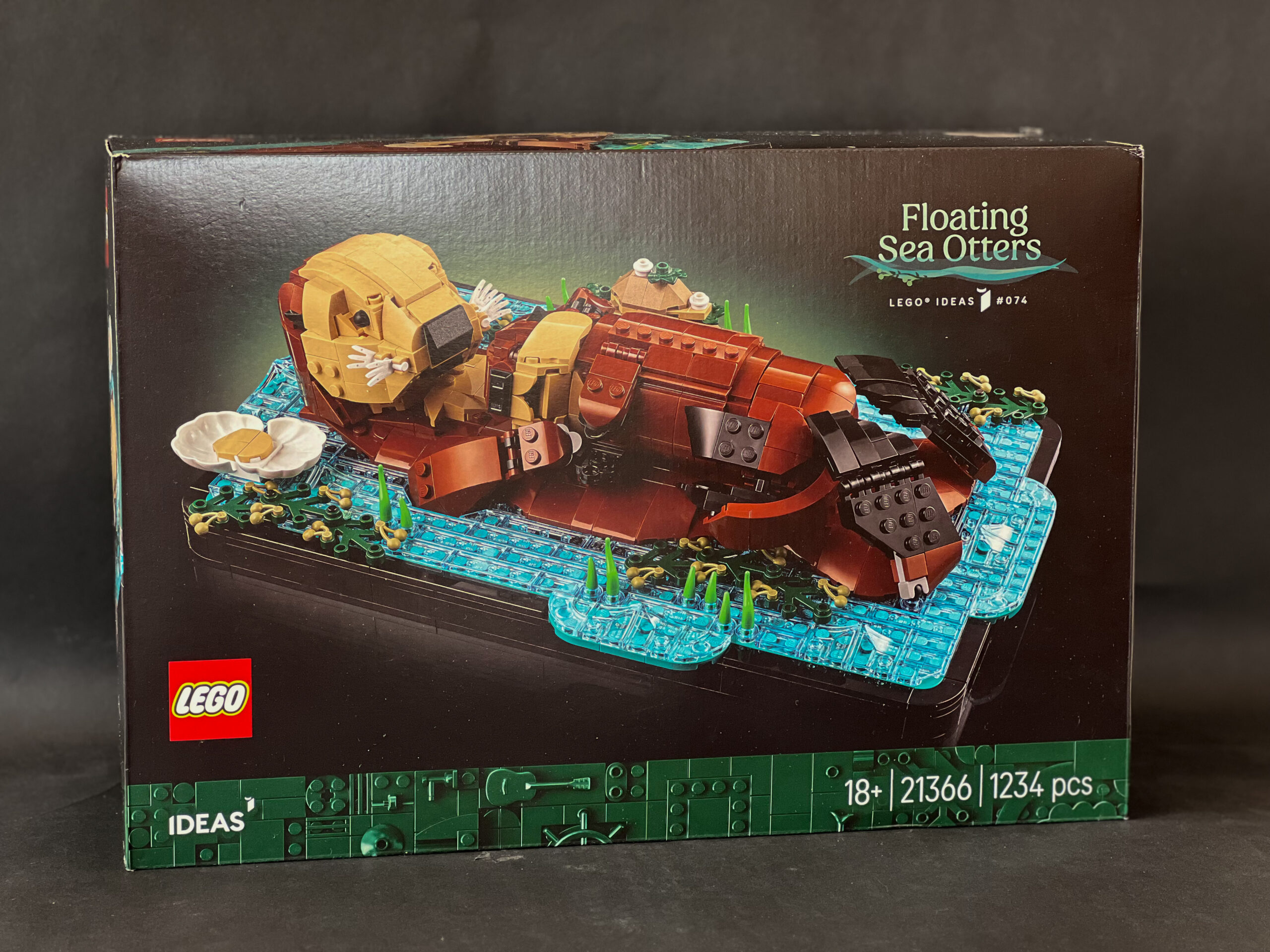
When the official set was revealed, many commented on the changes from the original design by Maximilian Lambrecht. Let’s compare the two and consider why those changes might have been made. In the final product, the original single otter was changed to a mother-and-pup pair. I think this modification adds greater depth and volume to the set, making the overall composition more dynamic and appealing, while also allowing for various ways to display the finished model.
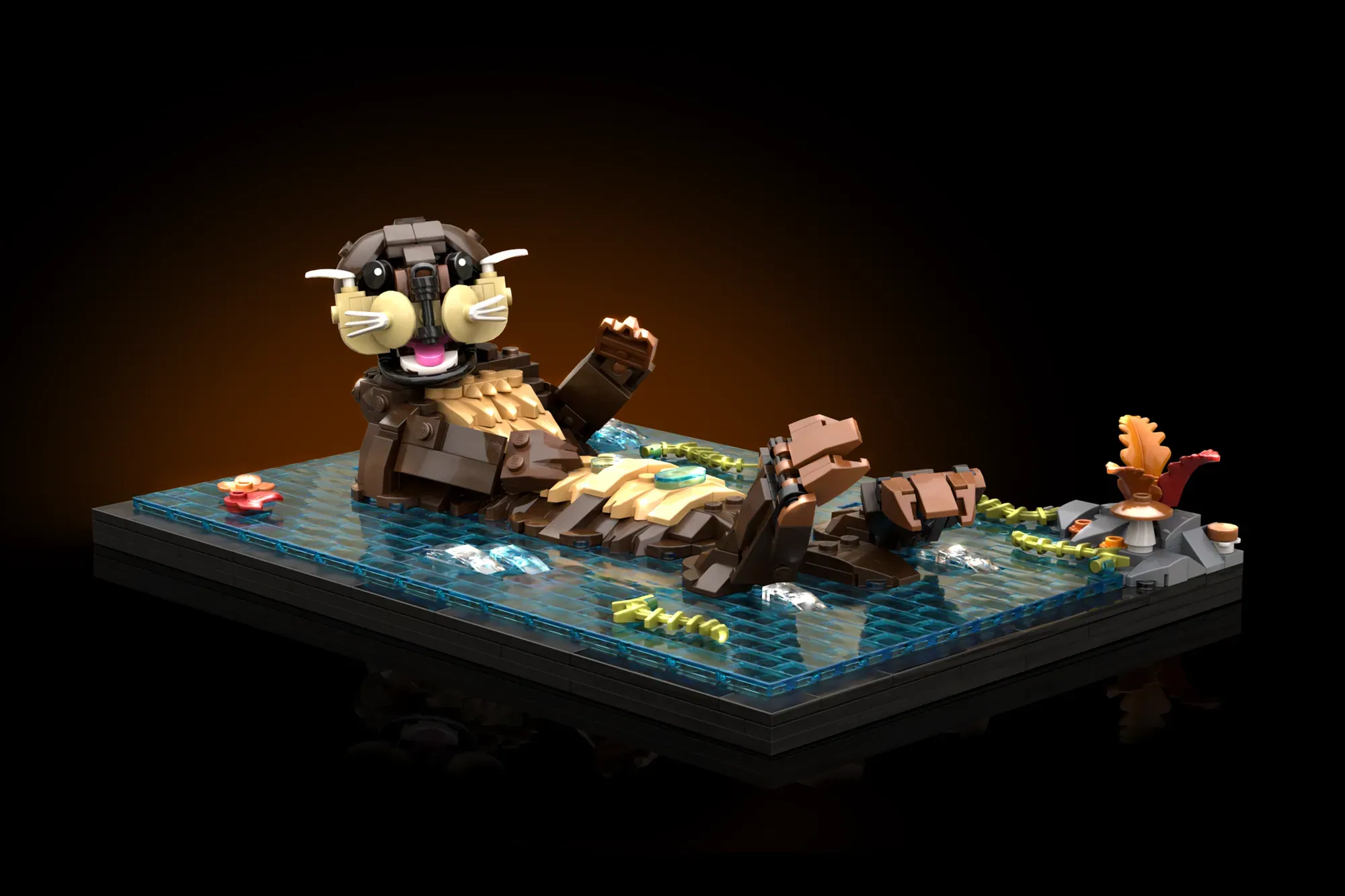
The otter’s color was also changed from dark brown to reddish brown. While real sea otters are closer to dark brown, reproducing that shade exactly might have made the model look too dark overall. For that reason, I believe the color change works well (in the fan build, the brighter impression comes mainly from the cuter facial expression). However, since both the parent and baby otters share the same color in the official set, it can be difficult to recognize what the model is representing at first glance, especially on the packaging. The impression would improve significantly if more tan-colored fur were added to the adult otter’s belly to add contrast ad allow the otter pup to stand out.
As for the facial design, the fan-built version has a more animated and adorable expression, whereas the official set aims for a more realistic look. The parts used for the eyes and cheeks have been substantially revised. Some might prefer the more cartoony fan design, but the natural look keeps the final set more in line with past nature sets in the Ideas line that focus on naturalism. Interestingly, though, the white claws [Part 10187], which were used to recreate the whiskers in the fan build, seem to have been adopted as a new recolor of the element in the official set.
The Build
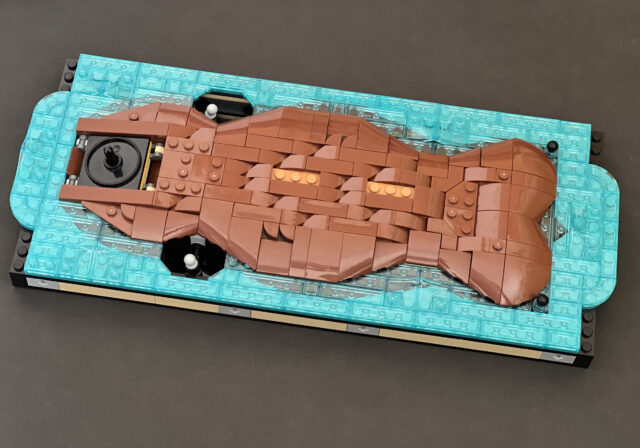
In bags 1–4, you start by building the base. Compared to the original design, the otter fills up much more of the base. While mostly the base is simple layering of tiles, we do set up several connection points that will be pivotal for the finished otter’s natural pose.
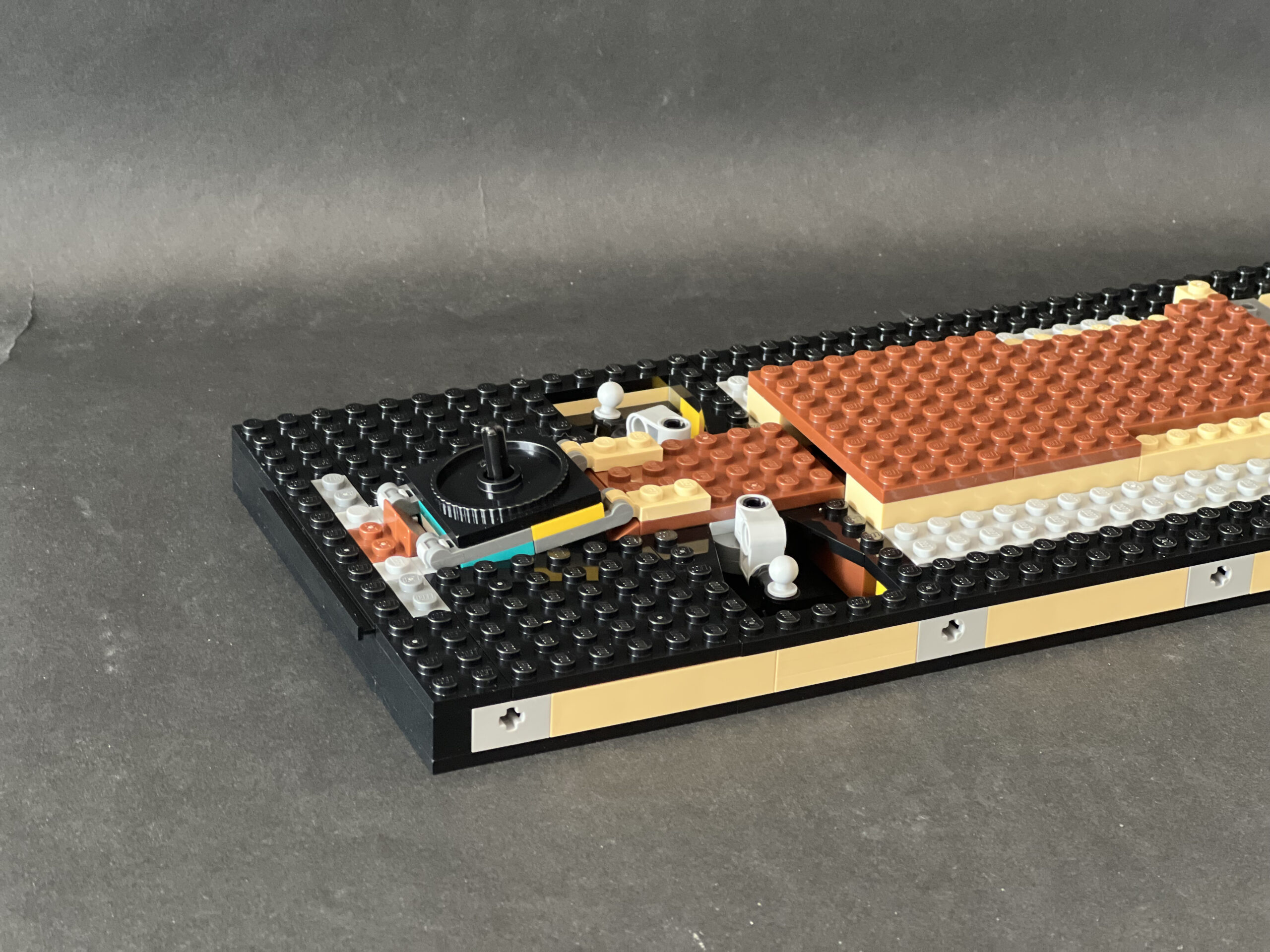
A vivid water surface is recreated by attaching trans-light blue tiles onto dark turquoise plates. My personal favorite part in the base is [Part 4190], and this set contains a generous 18 of them.
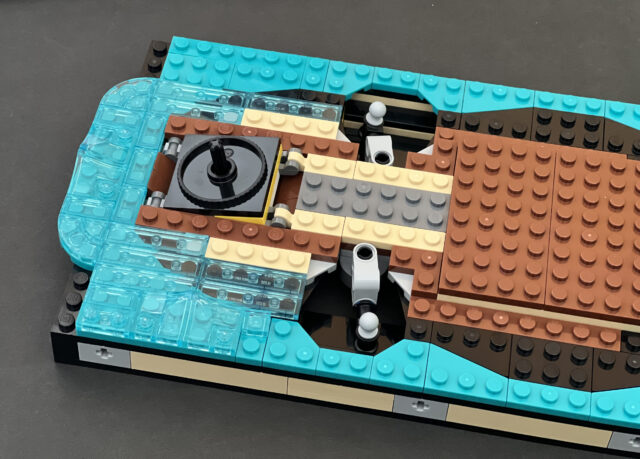
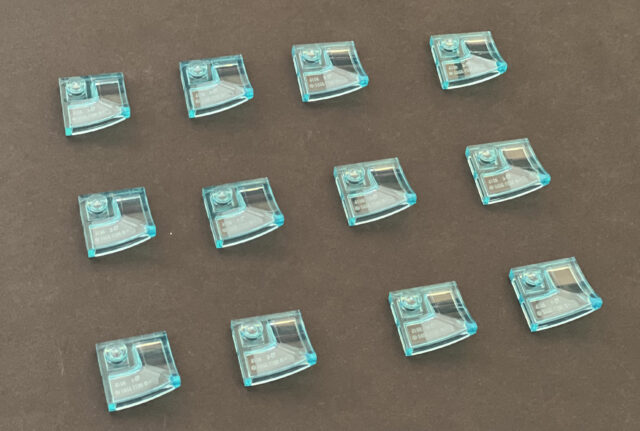
The otter’s fur texture is recreated by layering wedge elements as LEGO has done with other furry creatures from the Creator 3-in-1 line and even the buildable Chewbacca. These parts are particularly useful for simplifying organic expressions, especially for animals and other living creatures. Most of the otter’s body is submerged in the sea, with dark shadows subtly visible through the trans-light blue tiles.
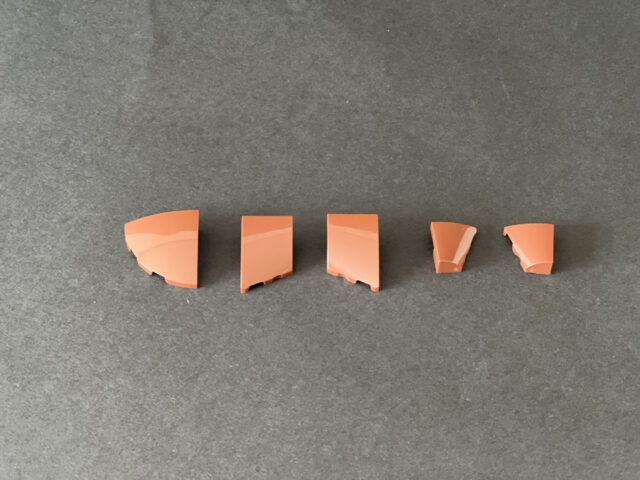
In Bag 6, we start on the otter’s face. For a creature builder, the face is the most important part, as it largely determines the overall quality and expressiveness of the model. In this set, the general approach to building the face is to attach curved slopes and wedge plates to modified bricks. Let’s take a closer look at how the face is constructed.
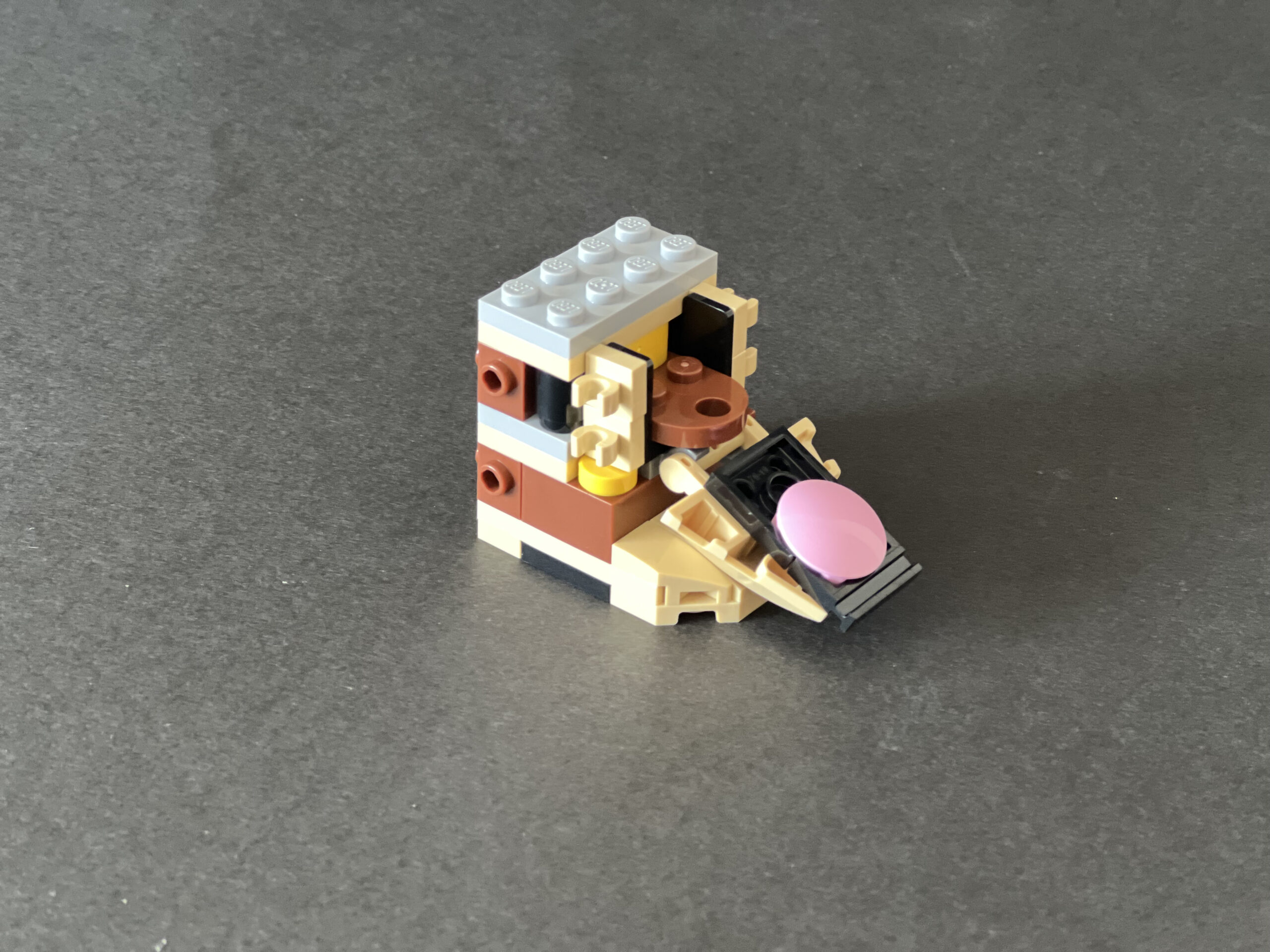
For recreating the otter’s eyes, the set uses Bar 1L with Tow Ball [Part 22484] . Since an otter’s eyes are not very large, a simple round tile would look oversized, making this an excellent part choice. One detail I personally appreciate is how Part 22484 is sunken into the concave hole of a Technic brick, bringing the eyes even closer to those of a real otter.
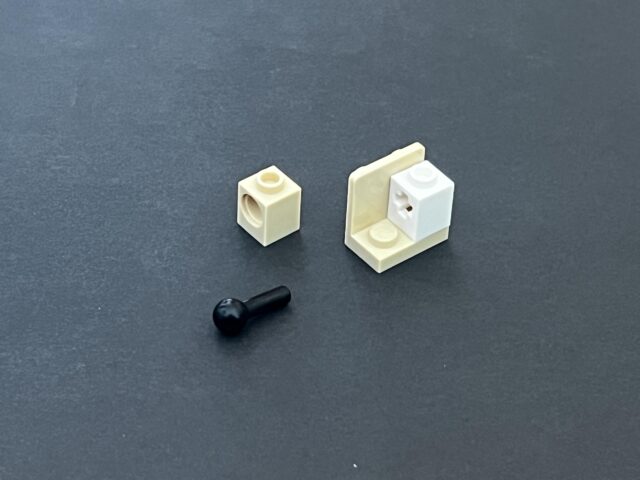
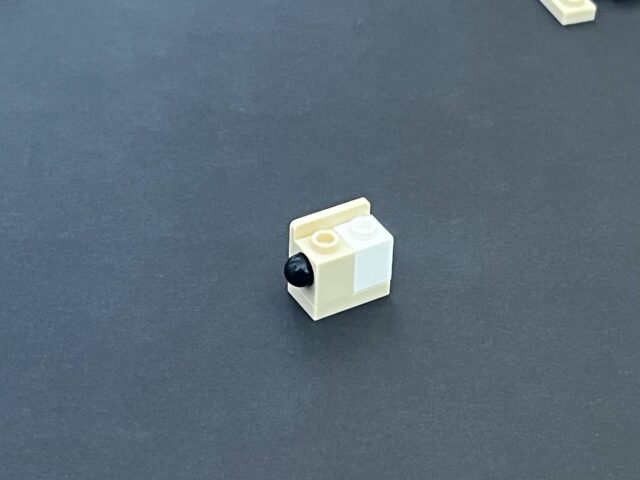
Next, let’s look at how the face is shaped. Simply attaching curved slopes to modified bricks makes it difficult to organically build a flexible, living creature. To create more natural lines, the muzzle is shaped by connecting the cheeks on a modified 2×2 plate with bar underneath [Part 15712] to clips on the head. For the otter’s ears, the designers use the new-to-2026 double convex corner pice [Part 7826], a very unique slope that, as of 2026, appears only twice in the recent Speed Champions McLaren W1. This set includes four of them.
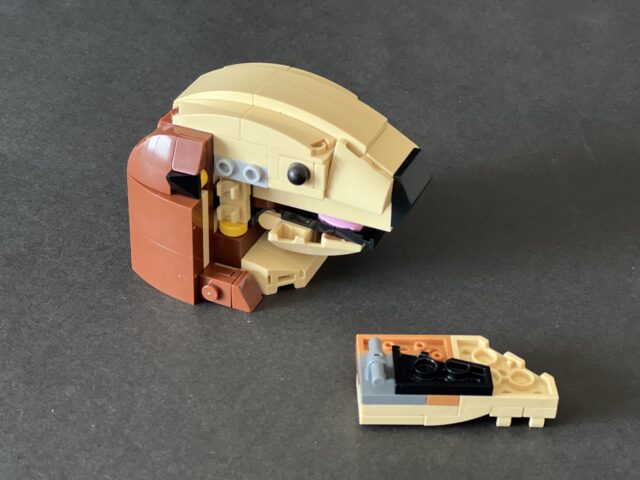
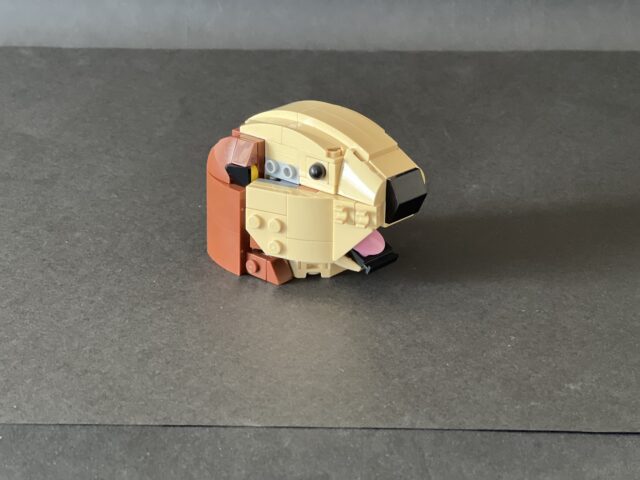
Take a look at the face from multiple angles. I think the characteristic mouth of the otter is especially well reproduced. The jaw can also open and close to some extent, allowing for changes in expression.
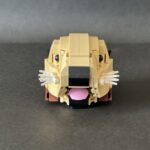
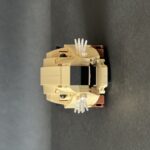
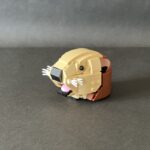
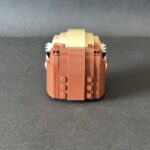
Now let’s focus on how the head connects to the body. In this set, the head connection is oriented slightly at an angle relative to the base. This subtle choice significantly improves the realism of the otter.
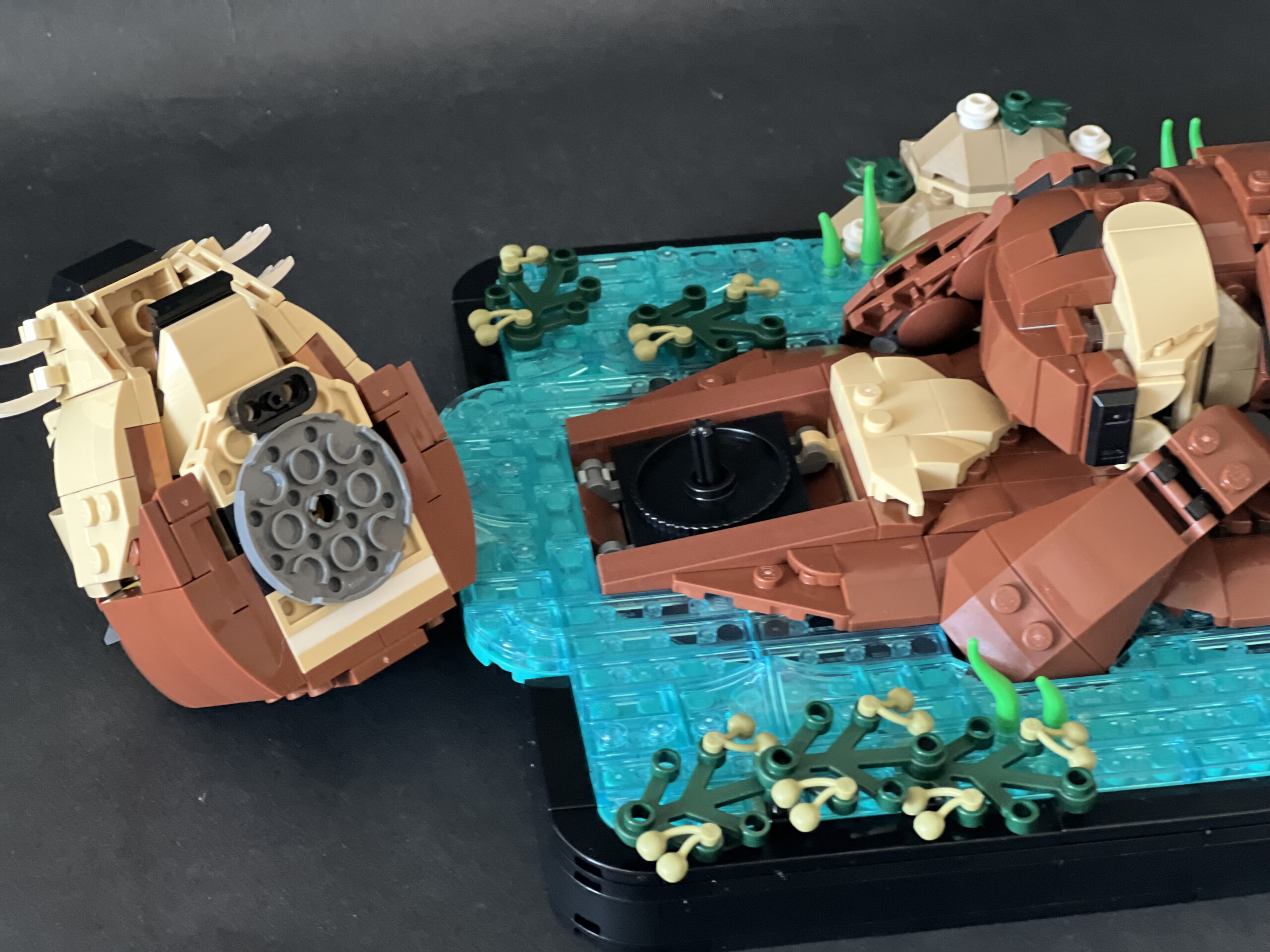
Moving on to the arms, the 2×3 design plate in black [Part 5518] does an excellent job of representing the otter’s hands.
The base of the arms is hollow, creating the impression that the arms are emerging from the surface of the water.
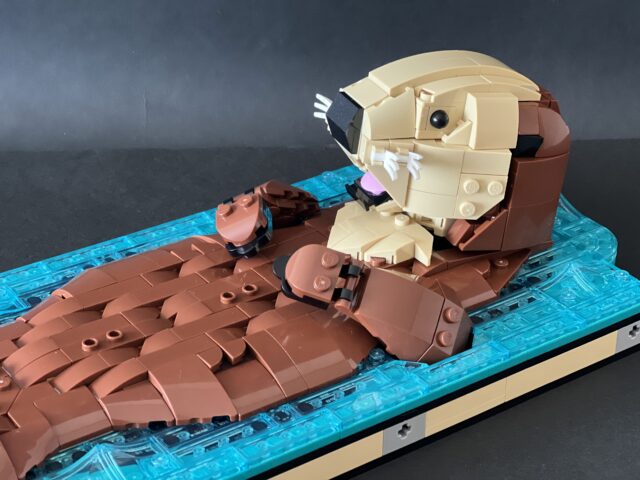
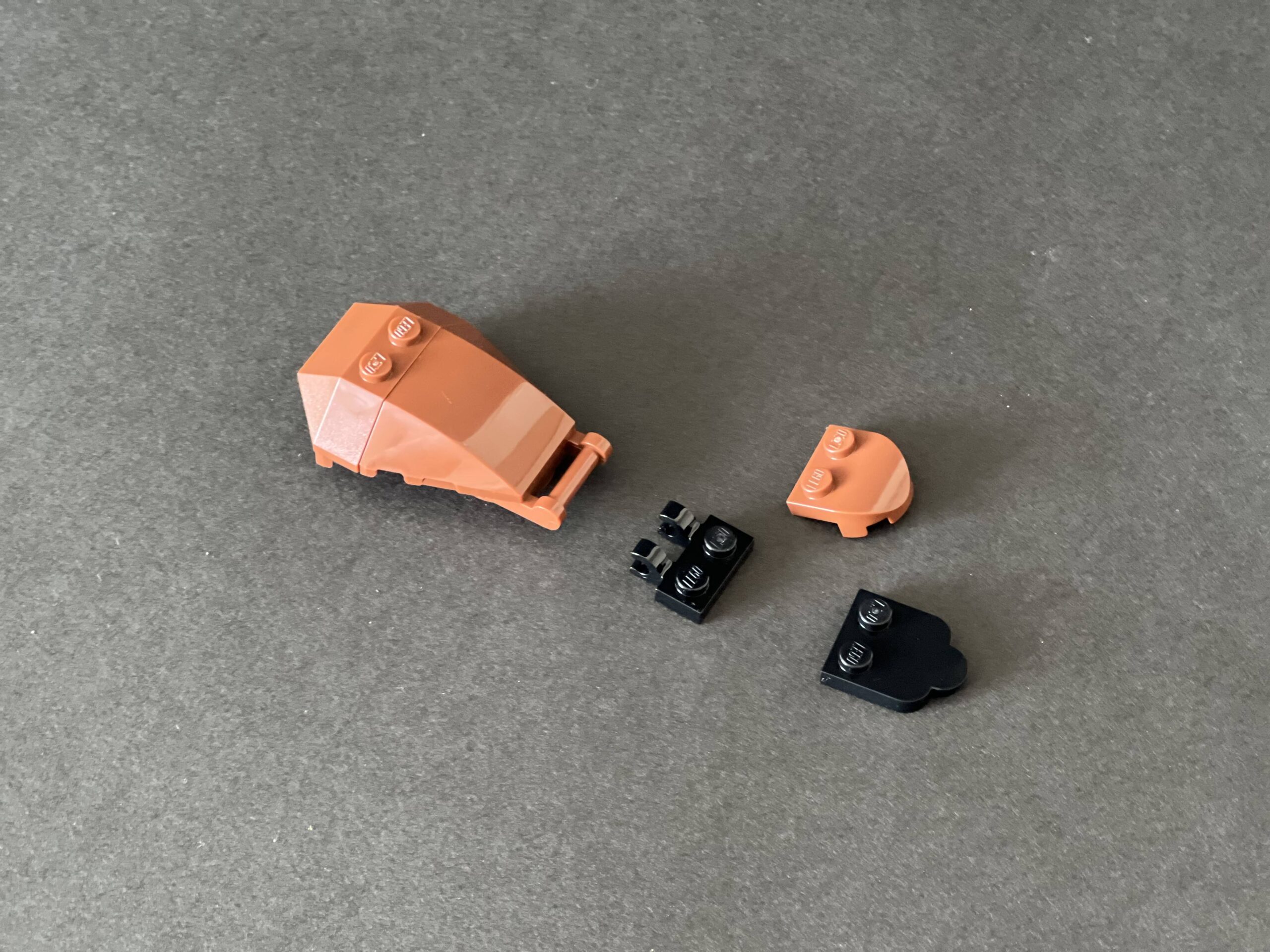
The flippers are well recreated using curved slopes for the toes. Part 7302, the 3×1 curve, is an element introduced in 2025 and, so far, appears in only 14 sets.
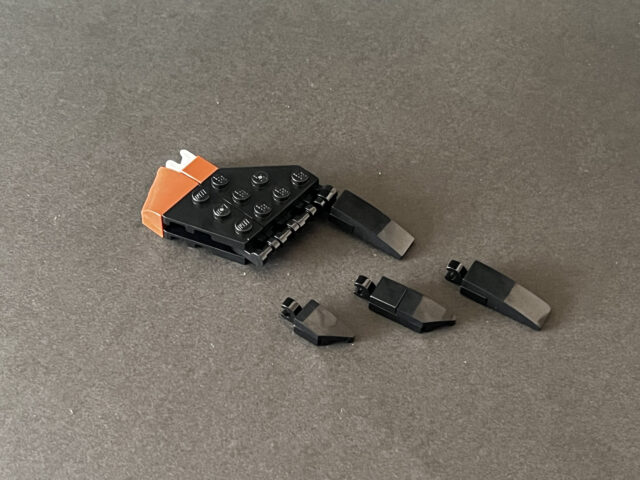
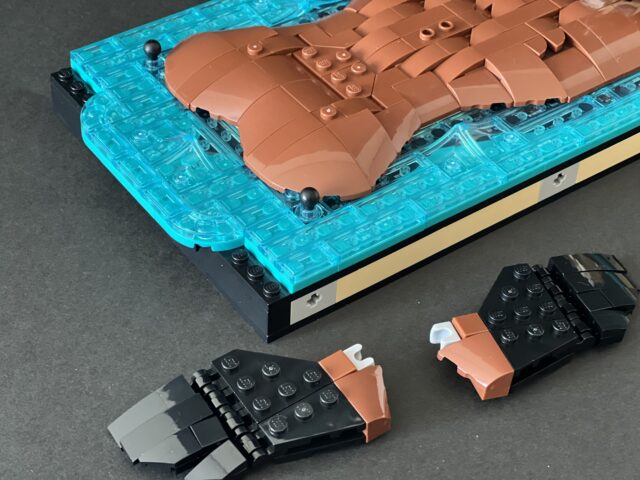
The legs are connected via ball joints, allowing their angles to be adjusted fairly freely.
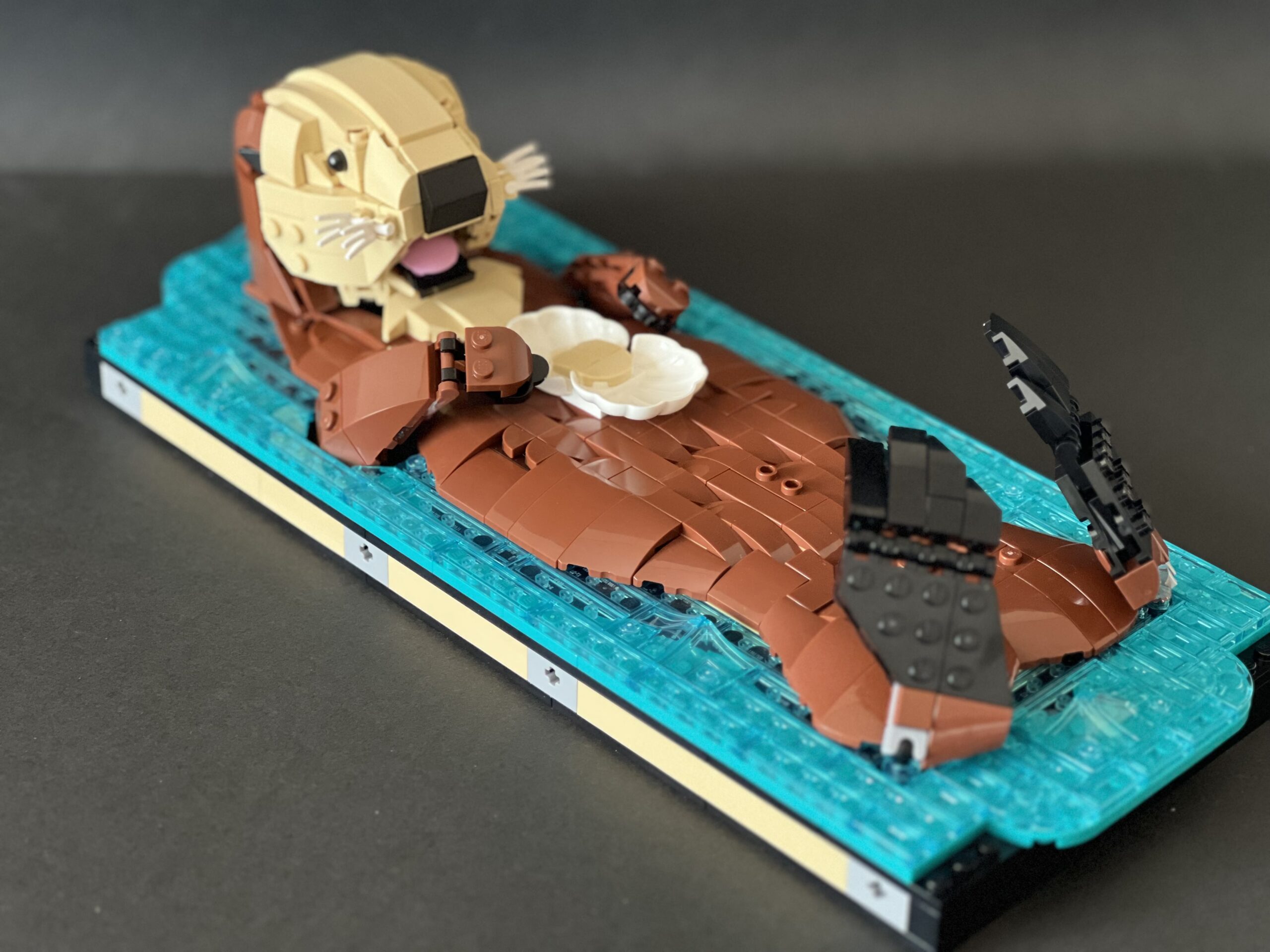
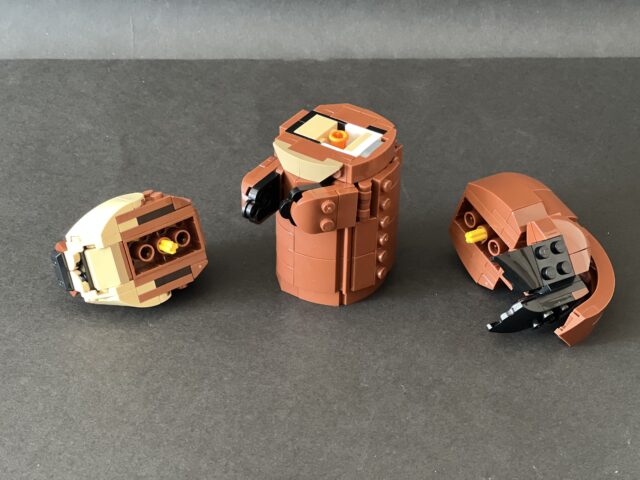
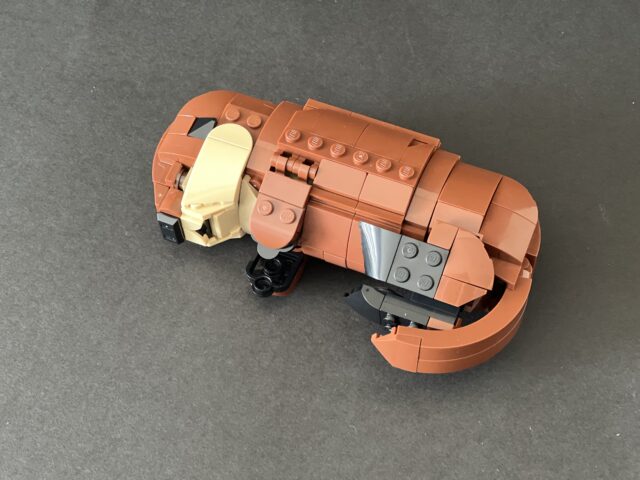
Moving on to Bags 10 and 11, it’s time to build the otter pup. This is undoubtedly where the set’s greatest sense of playfulness shines. It seems the compass tile I once lost was swallowed by the baby otter! If you’re wondering why the compass is there, it is a reference to the fan designer’s handle – His Brick Materials, which is in turn a reference to Philip Pullman’s His Dark Materials books, which features The Golden Compass. That’s quite an easter egg!
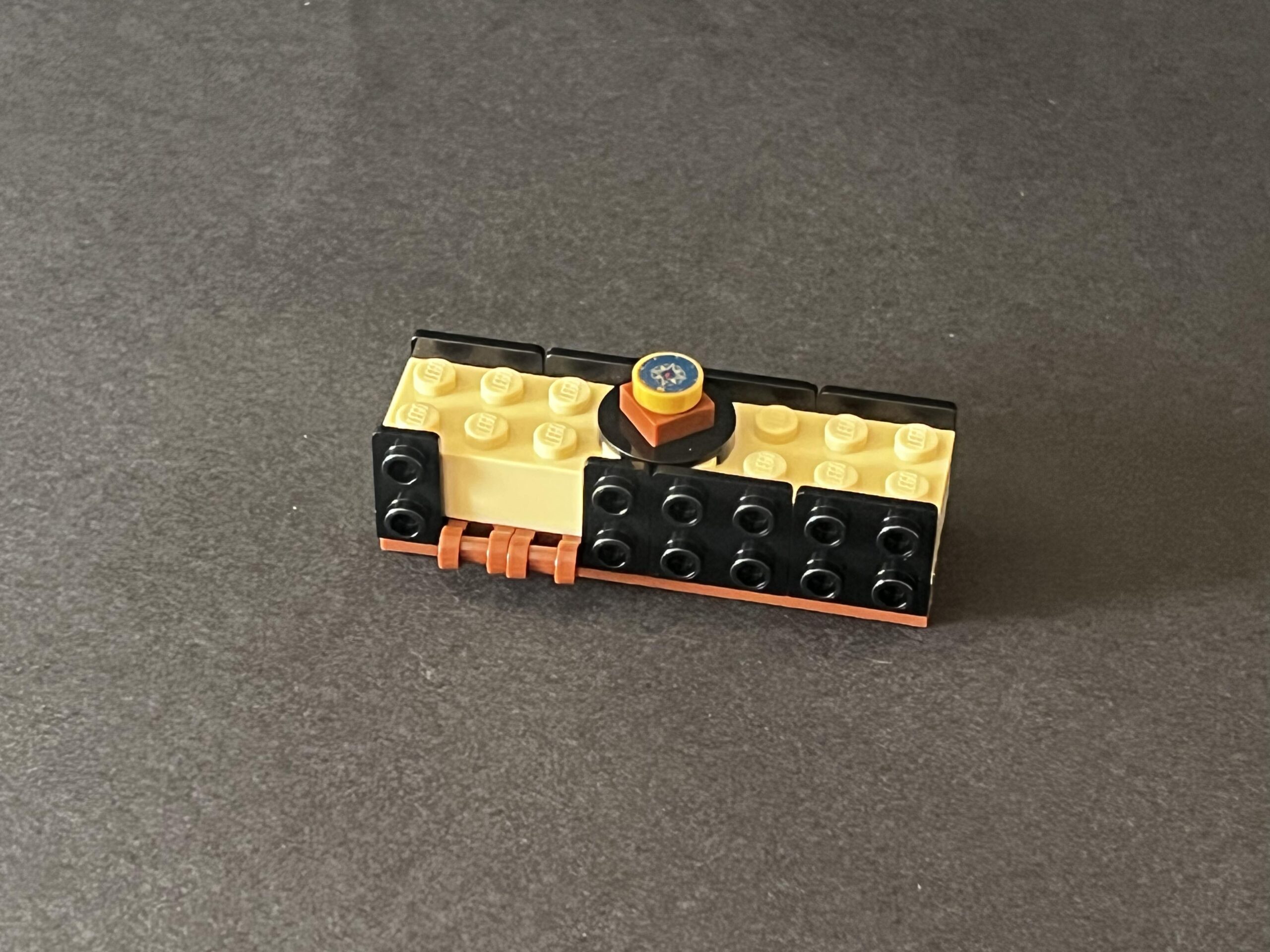
The baby otter’s body makes extensive use of the 2x1x1 2/3 curved slope [Part 5907] for a very tube-like body.
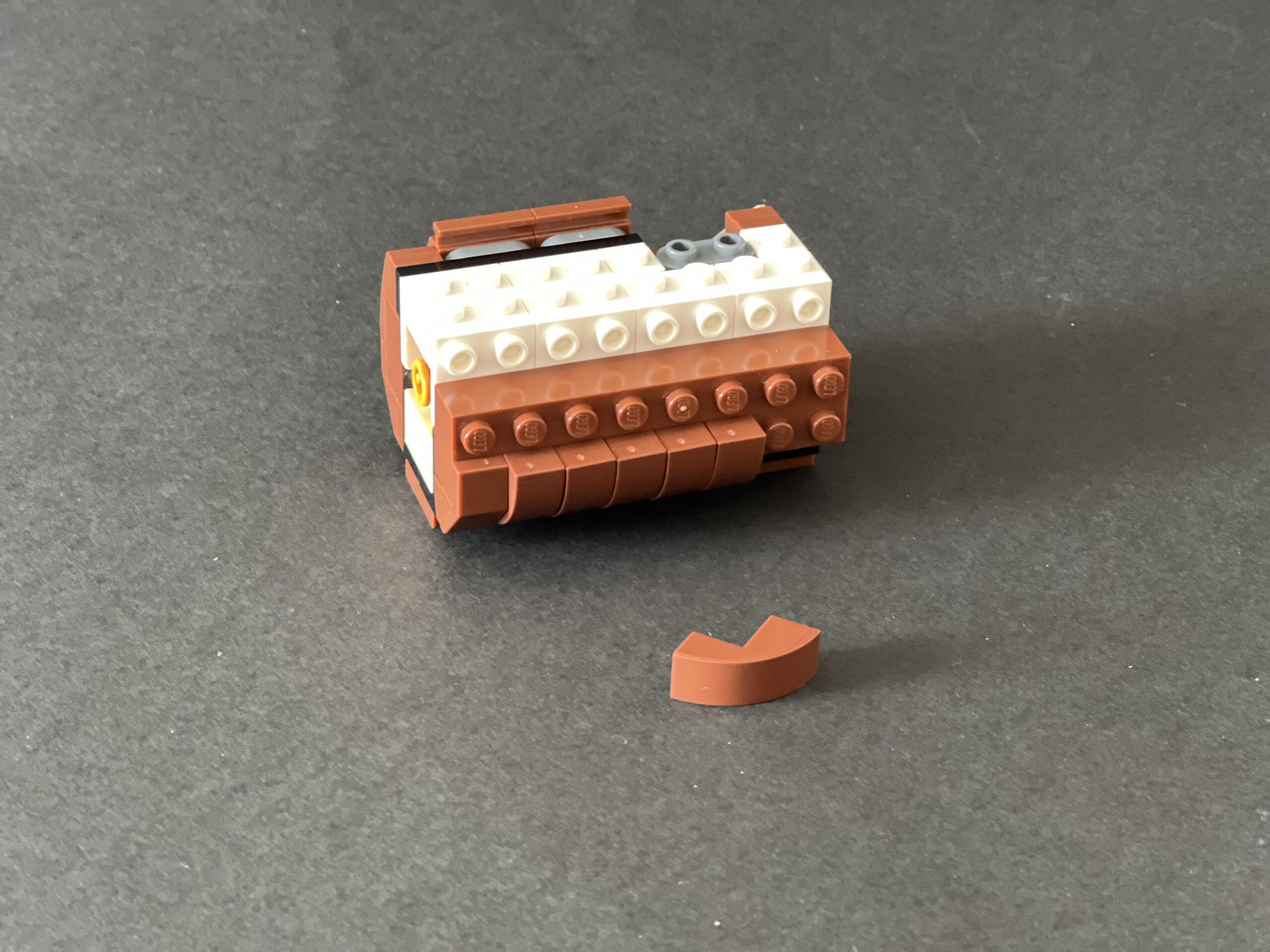
Compared to the adult otter, the baby otter’s face uses fewer building techniques, but it is still very well executed. Its ears are built with the same double-pointed cheese slope as the parent.
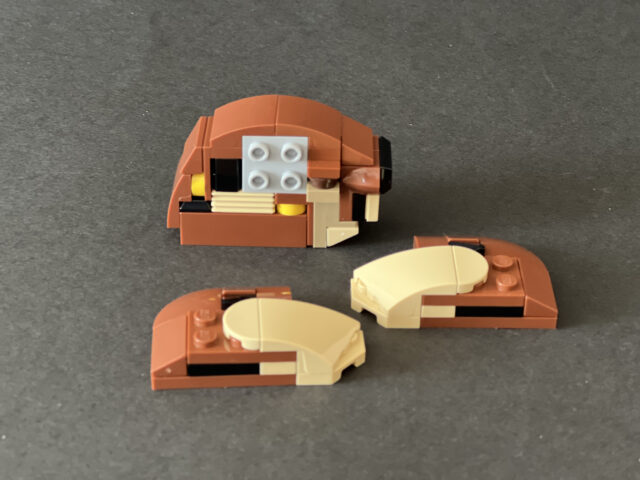
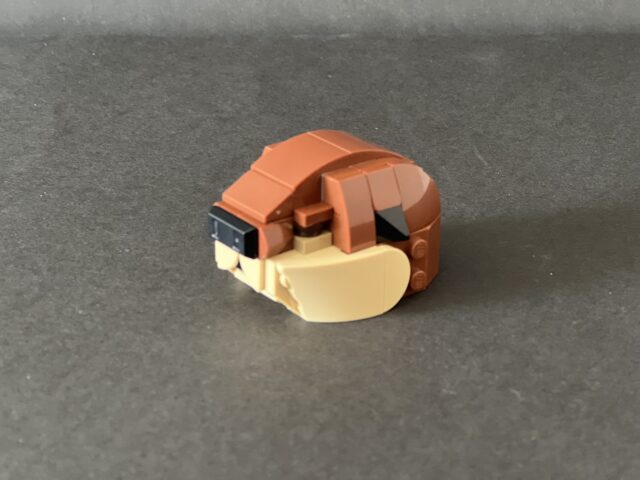
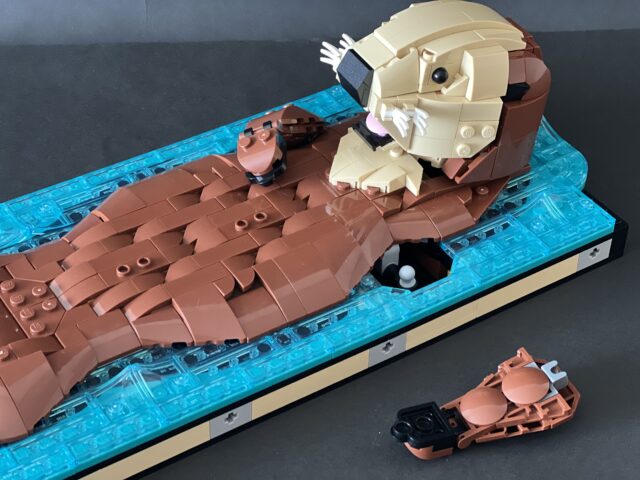
As shown in the photos, the baby otter consists of three parts. The eyes of the sleeping otter are built using round plates, which I think is the optimal solution.
The Finished Model
Finished! This set does a great job of capturing an otter parent and child.
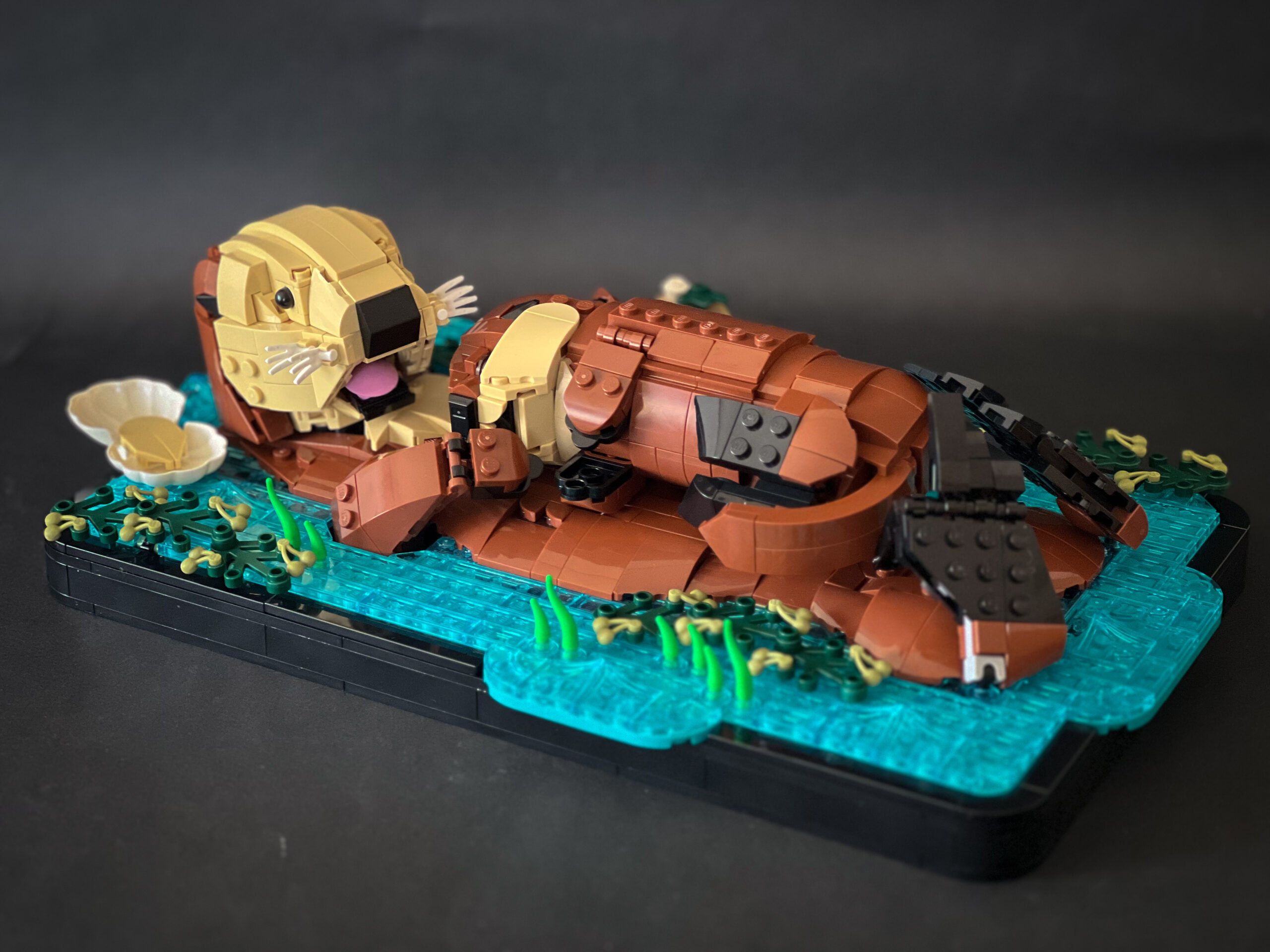
I have two favorite aspects. First, unlike the original fan-built otter, this set includes a sleeping baby otter. It is incredibly cute, and I honestly think the baby otter alone could be sold as part of the LEGO Creator series. Second, I love the arm connection design: the hollow shoulder area makes the arms look as if they are emerging from the water.
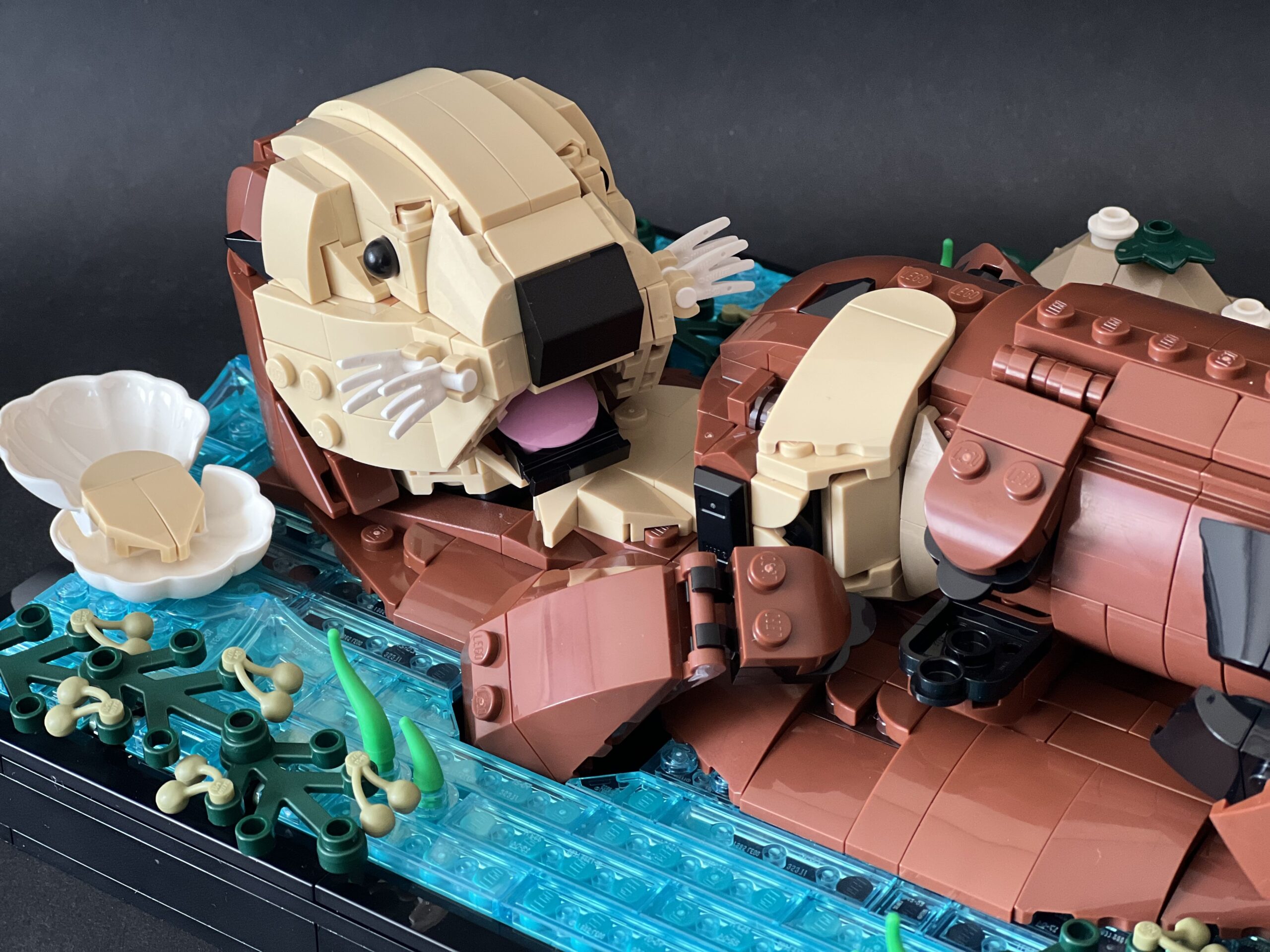
The arms are also poseable to a certain degree, allowing you to create poses like the ones shown in the photos.
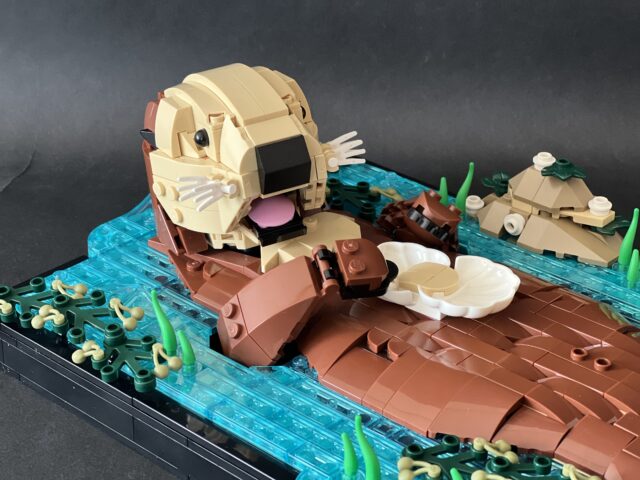
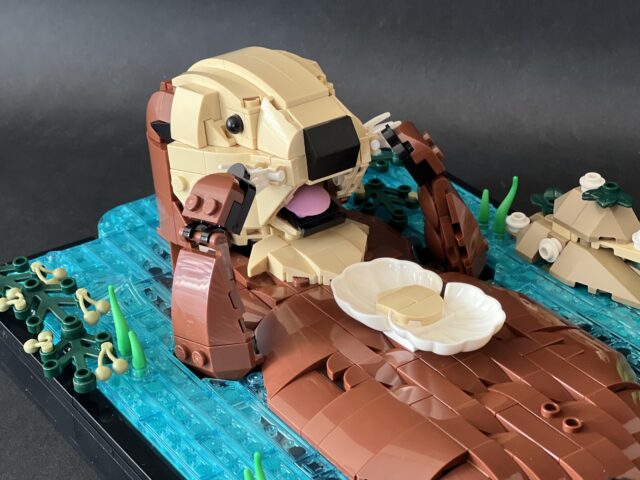
Floating Sea Otters provides a foundational building experience for constructing creatures with LEGO, comparable to Creator 3-in-1 sets, but with more of the build given to the display. The finished model does a commendable job representing a sea otter and pup with a bit of decor to enhance the presentation. That said, the model isn’t very tall, so its display impact is somewhat lower compared to other sets of similar size. (LEGO designed the set so that two otters can display side-by- side, holding hands, should you feel compelled to splurge on two copies of the set.) From these perspectives, I would consider it of average value relative to other sets at this price point.
LEGO Ideas 21366 | 1234 Pieces | Available March 1, 2026; Pre-orders open now |US $119.99 | CAN $149.99 | UK £99.99
Bonus MOC
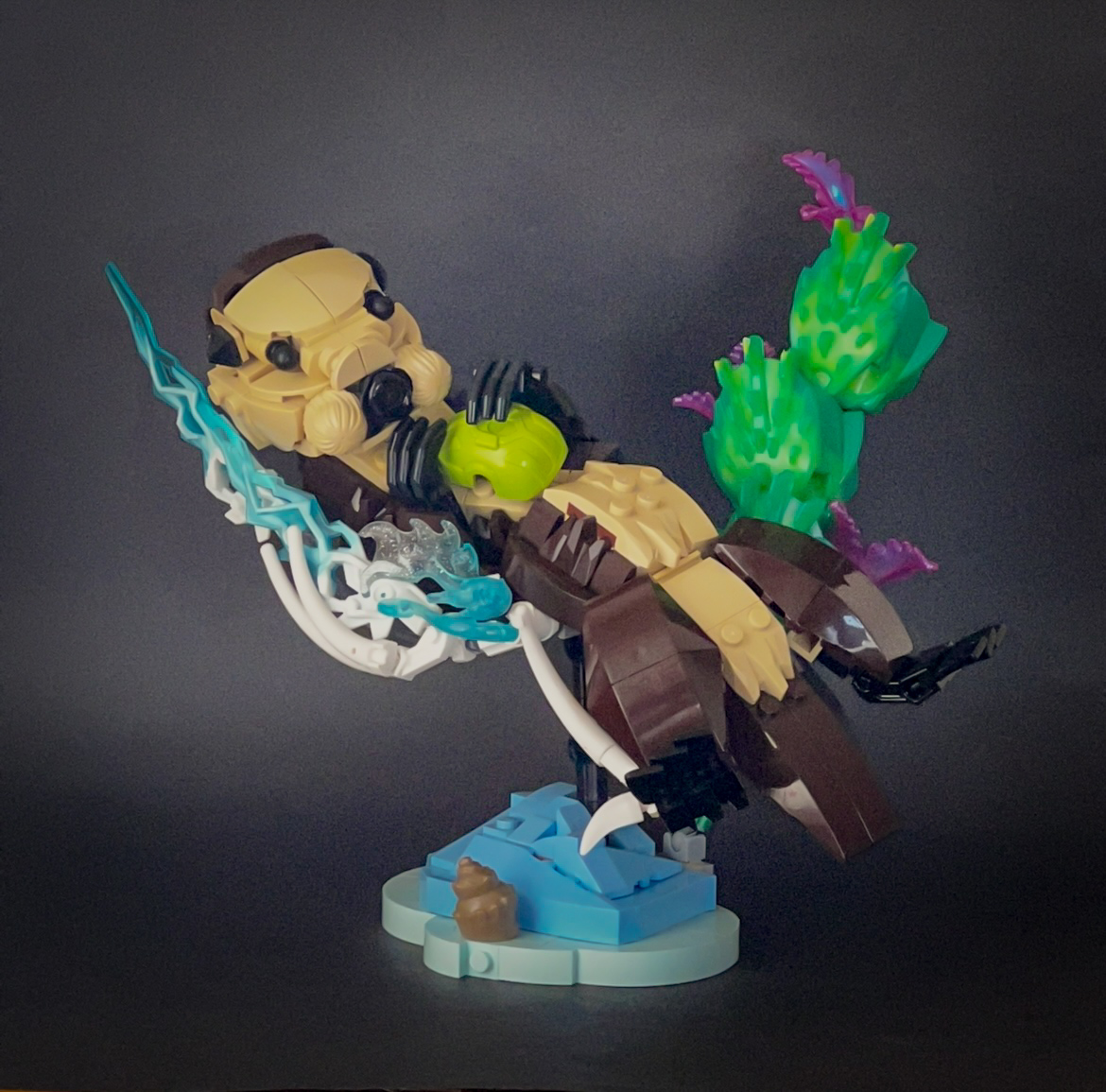
Finally, as a LEGO builder, I tried creating my own original otter. For the fur color, I chose dark brown. To balance the overall color scheme, I added green plants and water effects in the background and used a brighter base to prevent the model from feeling too dark. As a creature builder, I believe the face is the most important part of the build. To give the otter’s face more texture and a sense of fur, I used a Luke Skywalker hair piece around the mouth area. I also made the eyes slightly larger in proportion to the face compared to the official set, as I think this makes the otter look cuter. In addition, I adjusted the pose to create a more dynamic and three-dimensional staging than the set version. That is my approach to building an otter as a LEGO builder.
The post LEGO Ideas 21366 Floating Sea Otters – Otterly adorable [Review] appeared first on The Brothers Brick.