“The Conversation Piece” is a monthly BrickNerd series about creativity and building with LEGO authored by our friends over at the Builder Improvement Initiative (BII), a Discord-based community that helps LEGO builders of all levels get better at their craft through knowledge-sharing and constructive feedback.
Have a question you would like us to consider for a future article? You can submit it here. Enjoy!
New Parts and You
In a previous article, we dove into the world of new molds and the design principles that drive the evolution of new LEGO elements. The Speed Champions lineup has been at the forefront of new parts in recent years, curating a selection of parts that lend themselves to the smooth, complex geometries of modern cars.
To build on the topic of new parts (and continue the car theme!), this month’s deep dive covers the versatility of new parts—particularly in MOC building. Determining the purpose(s) and utility of new parts is the first step to incorporating them into your MOCs and beginning to develop techniques.
Form vs. Function
Most parts can be placed on a spectrum between form and function. For instance, parts with easily-accessible attachment points like studs, clips, bars or Technic connectors are often designed for function, as the attachment points offered are typically why the part is used in LEGO builds. Form-focused parts, on the other hand, often prioritize specific profiles or curves and may also include complex shapes, such as minifigure accessories that mimic real-life objects.
While it is usually easy to separate individual parts into these two categories, the distinction between form and function can become blurred when you consider how those parts are used. “Greebling” is a common building style that adds mechanical details to a MOC, typically using a mix of functional parts to achieve a unique form (check out Simon Liu’s great article covering Greebling basics). My beloved part 32828 (nicknamed the espresso plate) for example, is very much a function-first part, but frequently sees use as a decorative element in sci-fi and mechanical builds.
What Makes a Part Useful?
The value of a new part will differ for almost every builder (including the LEGO designers who introduce them in new sets!), as everyone has their own preferences and building styles. However, there are a few key design traits that make parts “useful” additions to the element portfolio.
Connecting to the System
Connection points are the most important factor in a part’s versatility, as they allow us builders to interface with the rest of the LEGO system. For function-oriented parts, more connection points generally equate to usefulness. I think my personal favourite part, 32828 Bar 1L with 1 x 1 Round Plate with Hollow Stud, is a great example of when a part design prioritizes connection points well. The part has a round plate base, allowing it to be angled easily, a bar connection at a convenient height above the base, a hollow stud on top for bar connections, and even a mini-peg hole at the end of its bar to attach plumes or Friends accessories.
A favorite technique of mine is with part 86996 (the middle example below, called a “blate”), where inserting the bar into the hollow stud can achieve an incredibly satisfying SNOT (Studs Not On Top) transition. I learned this particular technique from the McLaren F1 and Solus GT set, and it’s quite useful for compact geometry in smaller-scale builds. Some examples of the many connection options of 32828 are shown here.
Smooth is Fast
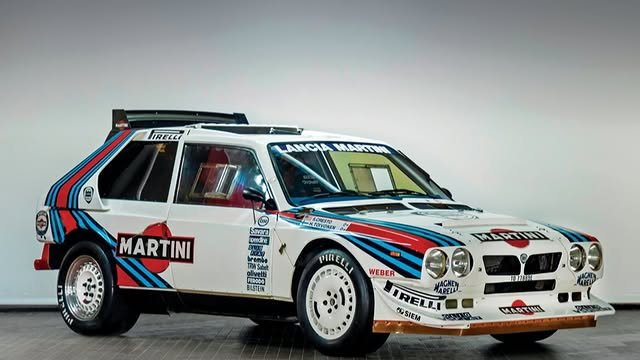
I will be the first to admit that I am not the most experienced when it comes to using smooth curves. The cars I like to design were typically designed in an era when the only drafting tool seemed to be a straightedge. For instance, my model of the 1986 Lancia Delta S4 uses mostly standard parts, but the angular edges of the real car translate well in brick form.
View fullsize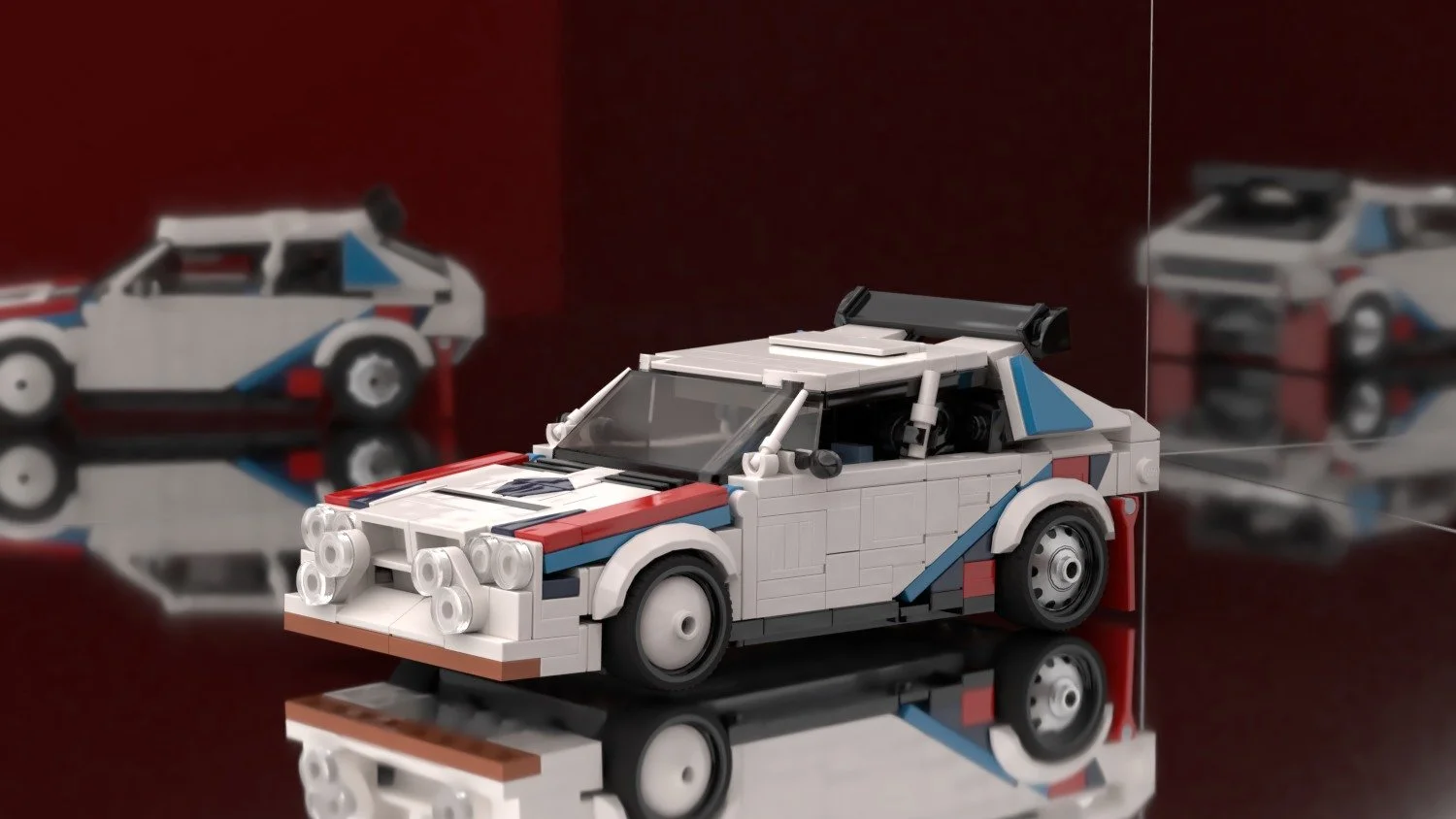
However, slopes and wedges are the main sub-categories of form parts. Thanks to the Speed Champions theme, as we discussed in our last article, wedges are currently one of the fastest-growing families of LEGO parts. While I don’t use them as much as I probably should, they’re fairly well-received and widely used within the MOC community. LEGO as a medium excels in flat edges and sharp corners.
In recent years, small curved slopes with a 1-brick radius have become more intertwined with the LEGO design language with a growing family of parts. All the parts shown here have at least one side that fits this 1-brick-radius profile.
However, when complex curves are required, smooth shaping can become difficult to capture with a standard set of simple part molds. Instead, one must use intricate, parts-intensive, or out-of-the-box techniques, as with many character or creature builds. The yearly additions to the family of wedges and curves really help to make builds appear cleaner and achieve shapes that were impossible before their introduction. Timofey Tkachev’s “Yosemite Sam” uses a variety of simple curved parts to replicate the cartoonish character style.
In comparison, Eero Okkonen takes a different approach with “Ihminen,” experimenting with a combination of many types of smooth-shaped curves to create a natural-looking result at a large scale.
Holding it All Together
The ability of a new part to strengthen a build is something I should admittedly give more attention to, as many of my builds are held together by little more than a few 1x1 connections and hope, but it’s something that should be considered when evaluating a new part. The shape and size of the 78329 1x5 Plate was very easy to create with other pieces prior to its release in the 2021 wave of Minecraft sets. However, I have found it quite helpful in MOCs, as it allows much stronger builds while maintaining an uneven width.
LEGO designer Chris Stamp, former head of Speed Champions, mentioned in an article on the 2021 Ford GT and Bronco that the part had been under consideration for 10 years. Although Stamp mentions that designers internally were under the opinion that “you can do that with a two and a three, or a four and a one... or a six and a pair of scissors!”, a 1 x 5 becomes massively more useful when you have less space to work with, as is the case with the 8-stud-wide Speed Champions set line.
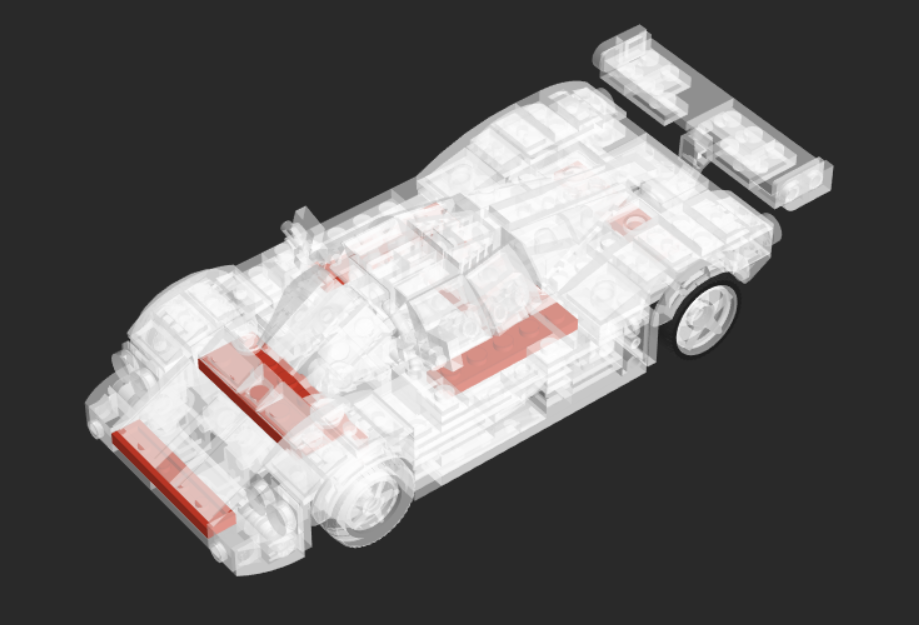
In the past five years, the 1 x 5 plate has appeared in 500 sets and has cemented itself as a useful part of the plate family. I’ve personally used it in the skeletons of many of my cars, especially when a car is an odd number of studs across. In my 9-stud-wide Mercedes-Sauber C9 model, I used several 1x5 plates (the parts in red below) to add stability.
View fullsize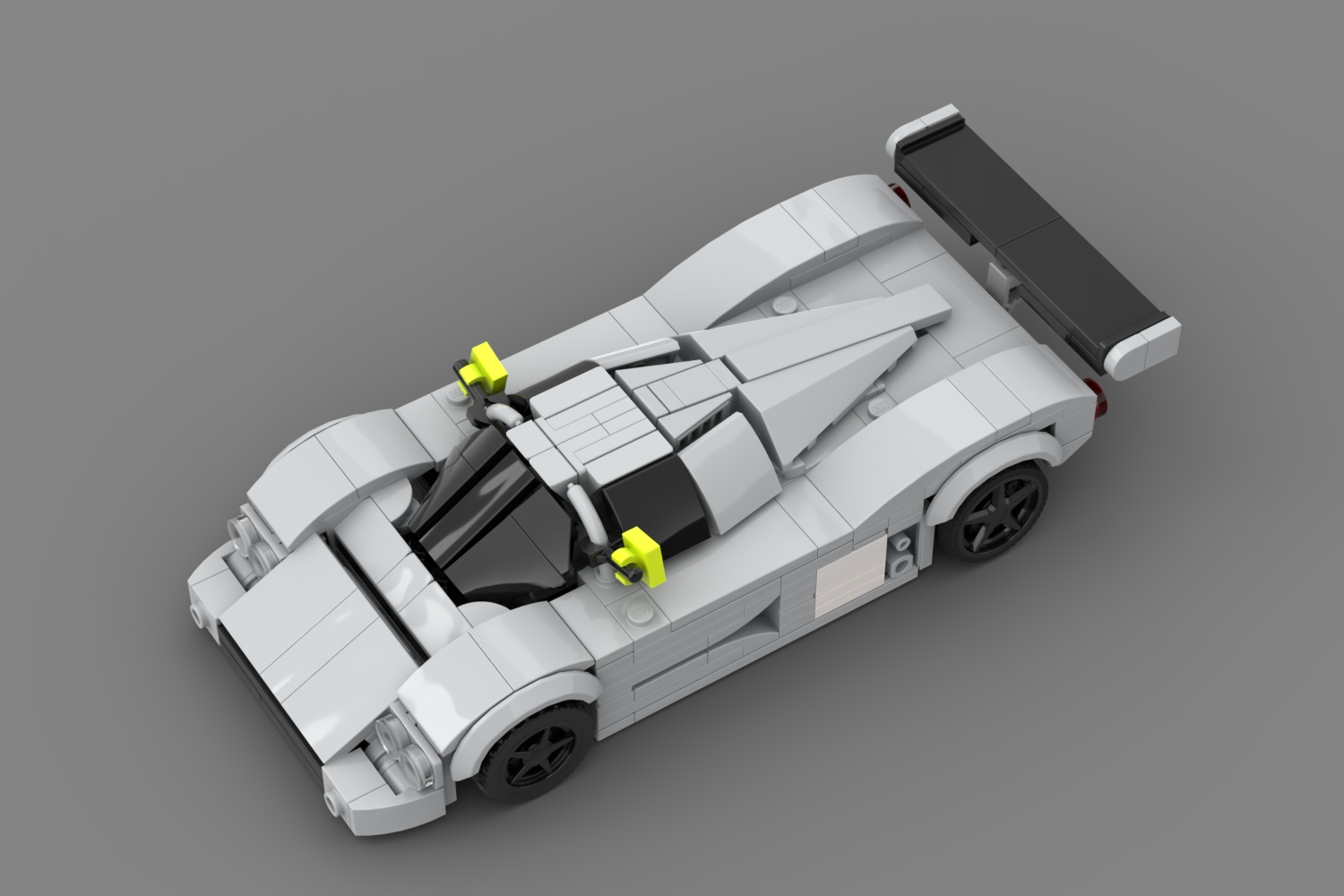
The “Other” Parts
Beyond form and function parts that are generally useful for a variety of builds, there are also highly specialized and often single-use elements. This “other” category gets by far the most new parts per year, as it includes essentially every CMF and minifigure accessory, not to mention one-off parts like molded windscreens for replica cars, among many others.
Are these parts useful to me? Not in the slightest. They don’t match the style I like to build in. Are they one of the most entertaining parts of the LEGO hobby? Most certainly.
The utility of these non-standard parts is largely found in NPU (Nice Parts Usage). It adds a certain amount of flair to a build if you can successfully integrate an oddly shaped part. An entry in the Iron Builder competition, Silmaril_1 masterfully incorporates the sand green Minecraft trident, a specialized part to replicate a tool from the video game, into his “Old Navy Pier” diorama.
Can New Parts Go Too Far?
LEGO’s new 2 x 2 wedge tiles (7828 and 7829), appearing in 2026’s January wave of Speed Champions sets, are the latest new parts to prompt discourse within the MOC building community. While many praise the tiles for allowing smooth surfaces where not possible before, they fill a very similar niche to the existing 2 x 2 wedge plates (24299 and 24307), albeit with a cleaner surface. Some builders welcome it, while others believe it is un-LEGO-like.
While opinions are entirely subjective, I’m not a particular fan. Studs are part of LEGO’s image as much as minifigures are (if not more), and I don’t particularly see the need to introduce a new part that does little other than erase them. However, the techniques used in a couple of the Speed Champions sets they debuted in (sets 77253 and 77254) do rely on the tiled-off top, so there may be some game-changing utility yet!
LEGO’s closest competitor in North America, Mega Bloks/Mattel Brick Shop, has relied on specially molded parts for many of their models to get a cleaner exterior look, as with their 2025 ‘90 Acura NSX. As a display set for the general consumer, these complex parts achieve their goal of providing a sleek display model. However as MOC builders, a specially molded, directional Acura fender is not fabulously useful, especially when a close replica can be achieved with a handful of relatively standard parts as in this MOC by JackyBoy5 on rebrickable.
View fullsize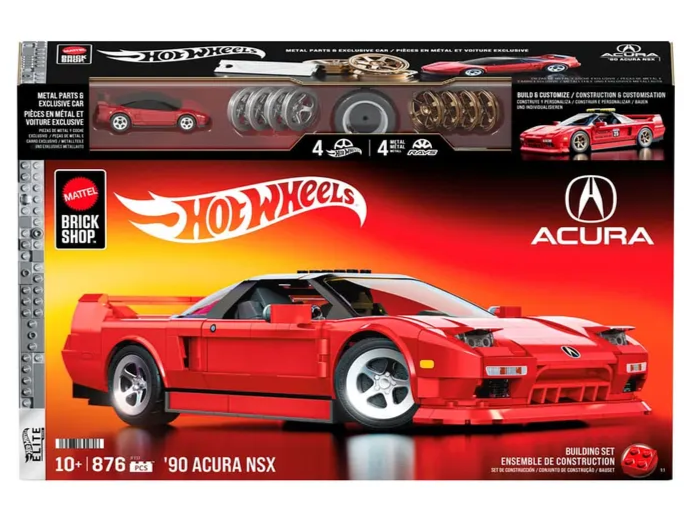
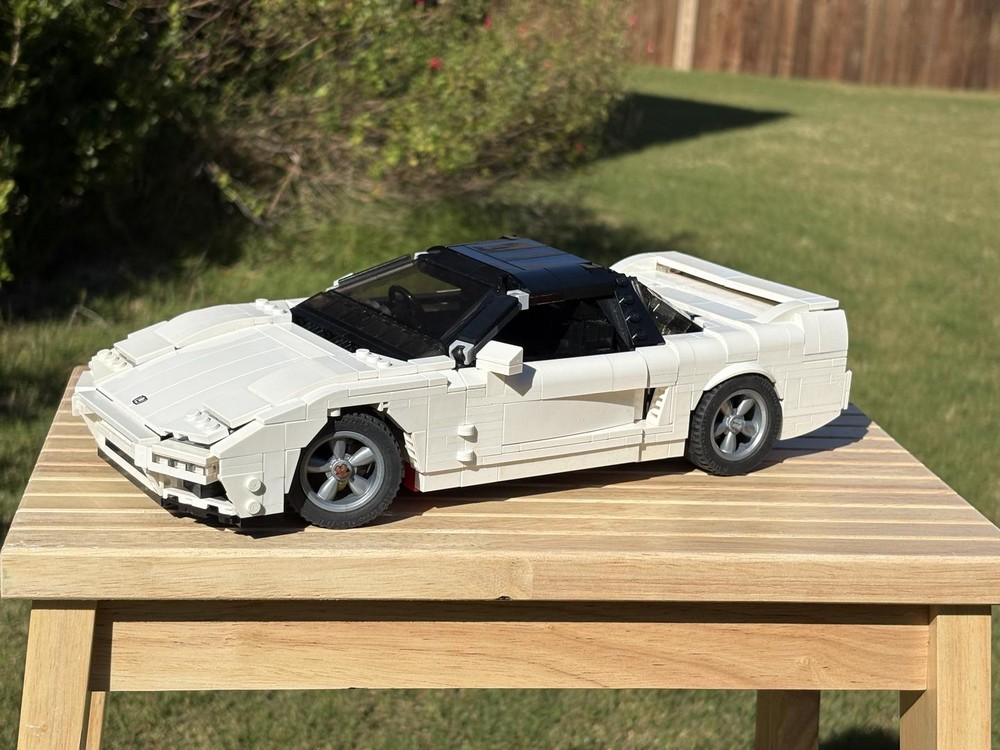
At some point, a building brick kit becomes a model kit. While I love my Tamiyas, making too many overly specialized parts could somewhat stifle creativity within the existing portfolio. I would hate to see LEGO sacrifice imperfect but creative solutions for less interesting pre-molded parts. A reliance on one-off molds can also make MOC building difficult, as single-use parts often have fewer color options, while smaller, more universal parts can be used in many sets, allowing for a greater variety of colors and part availability.
Could New Parts “Break” the System?
LEGO building is all about being creative within a set of given constraints. Personally, I greatly enjoy the challenge of solving problems with a limited toolkit. New parts ideally allow us to do new things with our bricks, rather than make things outright easier. Some parts, such as the relatively new 5264 “ring pop” certainly allow for some things to be done easier, such as stud reversals when combined with its bar counterpart 79194. But it also doesn’t make other stud reversals obsolete—while it’s one of the smallest footprints, it’s not the cleanest look, nor is it the thinnest stud reversal possible.
The part I’ve often seen cases made for is the infamous double-sided stud, common in many alternate brick brands. The existence of this element would essentially remove all interesting techniques of stud reversal should it be included in the LEGO catalog of parts.
It would create a few nice cases that weren’t possible before, but the harm it would do in erasing so many more interesting techniques would certainly damage the LEGO system. Again, while it may simplify and strengthen assemblies in some cases, the process of solving the connection puzzle becomes less important which to me, detracts from the overall LEGO building experience.
Piecing it Together
The influx of new molds continues with every new product release and doesn’t seem to be slowing any time soon. Many of these molds fall under the single-use or highly specialized “other” category, which is largely used in niche NPU cases and are not as useful for general MOC builders. In comparison, form and function parts are generally more universal and contain novel connection possibilities when compared to their existing part relatives.
While some new parts may seem like “cheating” or “breaking the system” or they just don’t match the style we are used to building, it doesn’t mean they can’t be useful. One of the great things about LEGO is that we curate our own collections. When we build, we have to choose every individual piece that goes into our MOC. If certain parts seem to make things too easy to build, we can choose to challenge ourselves to not use those parts. If the new wedge tiles detract from the LEGO-ness of a MOC, we can add studs somewhere else to ensure the build isn’t overly smooth.
Ultimately, new parts don’t dictate what we build; we decide what we want to build.
Written by BrickStig in collaboration with Julian Collins
Have a question for a future article in The Conversation Piece? Let us know in the comments below!
Do you want to help BrickNerd continue publishing articles like this one? Become a top patron like Marc & Liz Puleo, Paige Mueller, Rob Klingberg from Brickstuff, John & Joshua Hanlon from Beyond the Brick, Megan Lum, Andy Price, Lukas Kurth from StoneWars, Wayne Tyler, Dan Church, and Roxanne Baxter to show your support, get early access, exclusive swag and more.